
The world is moving towards renewable energy fast. This is because it’s plentiful and helps cut down on harmful emissions. From 2015 to 2024, renewable energy’s power output grew by 2,600 gigawatts. That’s a 140% jump.
This growth in sustainable energy sources is changing how we make electricity. It’s also making our environment cleaner. As we aim for a greener future, renewable energy’s benefits are clear. It cuts down on pollution and creates jobs in the clean energy field.
The International Renewable Energy Agency (IRENA) says 90% of the world’s electricity should come from renewable energy by 2050. This shows how big a role this sector can play.
Key Takeaways
- Renewable energy capacity is increasing rapidly, with a 140% increase between 2015 and 2024.
- Sustainable energy sources can significantly reduce greenhouse gas emissions and air pollution.
- The clean energy sector is creating new job opportunities, outnumbering fossil fuel jobs.
- Renewable energy is becoming the most affordable source of power in most parts of the world.
- 90% of the world’s electricity can come from renewable energy by 2050.
Understanding Renewable Energy
Renewable energy is key for a sustainable future. It comes from natural sources that can be replenished faster than they are used. This makes it crucial for reducing our use of finite resources and protecting the environment.
Definition and Types
Renewable energy is from sources that naturally replenish over time. The main types are solar, wind, hydroelectric, geothermal, and biomass energy.
- Solar Energy: Uses photovoltaic panels or solar thermal systems. It’s one of the most abundant sources.
- Wind Energy: Wind turbines generate clean and efficient electricity.
- Hydroelectric Energy: Uses water in motion, like rivers or ocean tides. It’s reliable and renewable.
The International Energy Agency (IEA) says renewable energy made up 26% of global electricity in 2020. Solar and wind energy were leading the way.
| Type of Renewable Energy | Description | Benefits |
|---|---|---|
| Solar Energy | Energy from sunlight | Abundant, zero emissions |
| Wind Energy | Energy from wind | Clean, efficient, cuts fossil fuel use |
| Hydroelectric Energy | Energy from water flow | Reliable, renewable, low costs |
Importance in Today’s World
Renewable energy is vital today. It helps tackle climate change, ensures energy security, and supports sustainable development.
“The shift to renewable energy is not just an environmental imperative, but also an economic opportunity. As the cost of renewable technologies continues to decline, they are becoming increasingly competitive with fossil fuels.”
Renewable energy cuts greenhouse gas emissions and improves air quality. It also boosts energy security by diversifying our energy mix. Plus, it creates jobs and drives economic growth worldwide.
In conclusion, understanding renewable energy is vital for our modern energy landscape. By embracing it, we can achieve a sustainable, equitable, and environmentally conscious future.
Environmental Benefits of Renewable Energy
The world is moving towards cleaner energy, and renewable energy is leading the way. Sources like solar, wind, and hydroelectric power are cleaner than fossil fuels. They help reduce the harm caused by energy production.

Reducing Greenhouse Gas Emissions
Renewable energy is great for the environment because it cuts down greenhouse gas emissions. Unlike fossil fuels, it doesn’t release carbon dioxide or other harmful gases. The International Energy Agency (IEA) says switching to renewable energy could cut carbon emissions by up to 70% by 2050.
“Renewable energy is crucial for mitigating climate change by reducing our reliance on fossil fuels and lowering emissions.” This change is good for the planet and helps meet global climate goals.
Minimizing Air and Water Pollution
Renewable energy also helps reduce air and water pollution. Fossil fuels pollute the air and water, harming people and nature. On the other hand, renewable energy sources like solar panels don’t pollute.
“The health benefits of transitioning to renewable energy are substantial, with potential savings of millions of lives lost to air pollution annually.”
Conserving Natural Resources
Renewable energy is also good for saving natural resources. Unlike fossil fuels, which run out, renewable energy is sustainable. Switching to renewable energy means we use less of the earth’s limited resources.
- Renewable energy reduces the depletion of natural resources.
- It minimizes the environmental impact associated with extracting and consuming fossil fuels.
- Sustainable energy sources can be replenished naturally, ensuring a continuous supply.
In summary, renewable energy has many benefits for the environment. It cuts down on greenhouse gas emissions, reduces pollution, and saves natural resources. Renewable energy is key to protecting our planet and fighting climate change.
Economic Advantages of Renewable Energy
Renewable energy offers many economic benefits, like creating jobs and improving energy security. As we move towards cleaner energy, the benefits of renewable energy technology are clear.

Job Creation in the Renewable Sector
The renewable energy sector is a big job creator. It already has more jobs than the fossil fuel industry. Almost 35 million people work in clean energy worldwide.
For every dollar spent, renewable energy creates three times as many jobs as fossil fuels. This includes jobs in installation, maintenance, manufacturing, and research.
The demand for clean energy is growing. As governments and businesses invest in renewable energy initiatives, more jobs are created. This helps the environment and boosts local economies.
Energy Independence and Security
Investing in renewable energy resources helps countries rely less on imported fossil fuels. This improves their energy security and trade balances. It also reduces the impact of fossil fuel price changes.
Energy independence is key for national security. It lowers the risk of price shocks and supply disruptions. Renewable energy also brings energy to remote areas, helping economic and social development.
Decreasing Energy Costs
The cost of renewable energy technologies has dropped over time. This makes them more competitive with fossil fuels. The cost reduction comes from better technology, economies of scale, and more competition.
As renewable energy costs keep falling, it’s becoming more appealing. The long-term savings are significant, making renewable energy a strong economic choice.
Technological Innovations in Renewable Energy
Technological innovations are changing the renewable energy world. These advancements make renewable energy technology more efficient and affordable. This is helping us move towards a sustainable future.
The renewable energy field is growing fast, thanks to solar energy. Advances in solar energy technologies have made photovoltaic cells and panels better. Now, they can work even when it’s not very sunny.
Advances in Solar Energy Technologies
Bifacial solar panels are a big step forward. They can make electricity from both sides, boosting energy output by up to 25%. Also, new perovskite solar cells are coming. They promise to be even more efficient and cheaper to make.
Wind Energy Developments
Wind energy developments are impressive too. Bigger, more efficient turbines are being used. Offshore wind farms are getting turbines that can make over 12 MW of power. This makes wind energy a strong clean energy solution.

Energy Storage Solutions
Energy storage solutions are key for renewable energy. Better battery tech, like lithium-ion batteries, has improved how much energy we can store. New ideas like hydrogen storage and pumped hydro storage are also being explored. They help make sure we always have sustainable energy sources available.
The future of renewable energy looks bright. New tech keeps pushing the field forward. As these advancements continue, renewable energy technology will play an even bigger role in our clean energy solutions and sustainable energy sources.
Policies Supporting Renewable Energy
The move to renewable energy is led by federal, state, and global policies. These policies are key in helping us switch from fossil fuels to cleaner energy.
Federal Incentives and Tax Credits
Federal incentives are big in pushing for renewable energy. The government gives tax credits for solar and wind energy investments. This makes it easier for companies and individuals to go green.
Key Federal Incentives:
- Production Tax Credit (PTC)
- Investment Tax Credit (ITC)
- Renewable Energy Grants
State-Level Initiatives
States also have their own plans to boost renewable energy. They have Renewable Portfolio Standards (RPS) that force utilities to use more renewable energy. Plus, some states offer rebates for solar panels.
Examples of State-Level Initiatives:
| State | Initiative | Description |
|---|---|---|
| California | RPS | Requires utilities to generate 60% of their electricity from renewable sources by 2030. |
| Texas | Competitive Renewable Energy Zones (CREZ) | Designated areas for wind energy development, with enhanced transmission infrastructure. |
Global Agreements and Commitments
Countries worldwide are joining forces to fight climate change through agreements like the Paris Agreement. This agreement aims to keep global warming under 2 degrees Celsius and try to keep it at 1.5 degrees.
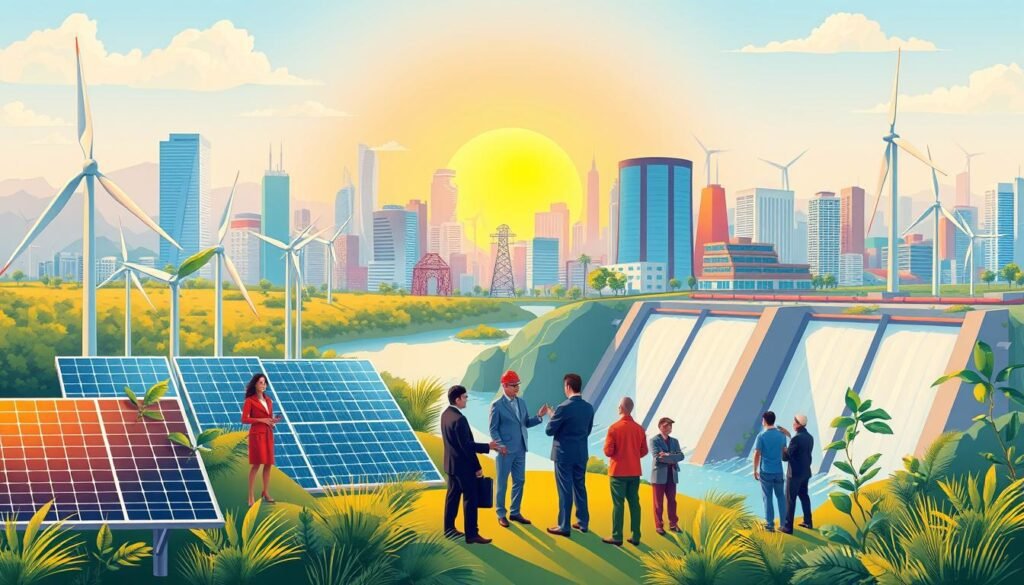
To meet the Paris Agreement goals, we need a lot of investment in renewable energy. About $4.5 trillion is needed every year until 2030. This is a big jump from the $7 trillion spent on fossil fuels in 2022.
Global Investment Needs:
- $4.5 trillion annual investment in renewable energy by 2030
- Transitioning from $7 trillion spent on fossil fuels in 2022
The Role of Renewable Energy in Climate Change Mitigation
Mitigating climate change means moving to renewable energy fast. This can cut greenhouse gas emissions a lot. To stop the worst climate change, we need to cut emissions almost in half by 2030. By 2050, we must reach net-zero.
Renewable energy can make 90% of the power sector clean by 2050. This is key to reaching our goals.

Impact on Global Temperature Rise
Using renewable energy sources can lower global temperature rise. It cuts down carbon dioxide and other gases in the air. As we switch to cleaner energy, we use less fossil fuels.
This leads to fewer emissions that cause global warming.
Studies say using more renewable energy can keep warming under 2°C. This is what the Paris Agreement aims for. Solar, wind, and hydroelectric power don’t release greenhouse gases.
Contribution to Sustainable Development Goals
Renewable energy fights climate change and helps with Sustainable Development Goals (SDGs). SDG 7 is about getting everyone access to clean energy. Renewable energy can reach energy to places that need it most.
It also creates jobs and boosts local economies, helping SDG 8. Investing in renewable energy makes energy more secure. It also lowers price swings and improves air quality, helping health and the environment.
In short, renewable energy is crucial for fighting climate change. It does more than just cut emissions. It supports sustainable growth and energy security. As we move to a low-carbon world, renewable energy’s role will grow even bigger.
Challenges Facing Renewable Energy Adoption
Renewable energy has made great strides, but it still faces many hurdles. Moving to renewable energy is key for a green future. Yet, this journey is not easy.
Infrastructure Limitations
One big challenge is the need for new infrastructure. Our current energy systems are mostly for fossil fuels. Building new transmission lines, storage facilities, and smart grids is vital to adapt.
Without the right infrastructure, adding renewable energy to the grid is hard. It also makes energy more expensive. Good planning and building are key to growing renewable energy.
Financial Investment Barriers
Money is another big issue. The cost of starting up with renewable energy, like solar and wind, is high. Finding money for these projects is essential.
Help from governments, like tax breaks, can ease these costs. Getting more money for renewable energy is crucial.
Public Awareness and Acceptance
Getting people to support renewable energy is also a challenge. Some people don’t understand or trust these new technologies. Teaching people about renewable energy’s benefits is important.
Getting communities involved in renewable projects helps too. Working with local people can build support for green energy.
Case Studies of Successful Renewable Energy Projects
Across America, many renewable energy projects are leading the way in sustainability and energy production. These efforts help us use less fossil fuel and show how renewable energy can meet our growing needs.
Solar Power in California
California is a leader in solar energy, with big solar farms popping up all over. The Topaz Solar Farm is a big example. It covers over 4,700 acres and powers about 160,000 homes. This shows how solar power can be a big part of our energy mix.
Wind Farms in Texas
Texas is the top state for wind energy, thanks to its wide open spaces and strong winds. The Roscoe Wind Farm is huge, with over 600 turbines. It powers more than 250,000 homes. Wind farms like Roscoe show the good side of wind energy for both the economy and the environment.
Hydroelectric Power in the Pacific Northwest
The Pacific Northwest is famous for its hydroelectric power, with the Grand Coulee Dam being a top example. This dam is a big source of clean energy and helps manage water in the area. Projects like Grand Coulee Dam show how important water management and energy production are together.
| Project | Location | Capacity |
|---|---|---|
| Topaz Solar Farm | California | 550 MW |
| Roscoe Wind Farm | Texas | 781 MW |
| Grand Coulee Dam | Washington | 6,809 MW |
These examples show the wide range of successful renewable energy projects in the U.S. By looking at these cases, we can learn more about the challenges and chances of moving to a greener energy future.
The Future of Renewable Energy
The future of renewable energy looks bright, thanks to new trends and predictions. As we keep pushing the boundaries of innovation, renewable energy will become even more important. It will shape our energy world in big ways.
Advancements in Technology
New solar panels and wind turbines are getting better. So are ways to store energy. These improvements will make renewable energy cheaper and more practical.
Integration into Smart Grids
Renewable energy will soon be part of smart grids. This will make energy distribution and management better. It’s key for a stable and reliable energy supply as we use more renewable energy.
Innovation and research will keep driving renewable energy forward. By investing in these areas, we can build a greener energy future.