
In August 1971, Stanford University hosted a groundbreaking study. The Stanford Prison Experiment aimed to explore authority and conformity. But it quickly became a disturbing event.
Philip Zimbardo, a psychology professor, led the study. He wanted to see how people act when in power or submission. The study took place in a mock prison basement, where students became cruel guards and broken prisoners.
The study’s findings shocked the world. It changed how psychological studies are done. Universities across America created new rules to protect participants after the Stanford University incident.
The study by Philip Zimbardo still impacts discussions today. It influences prison reform, military training, and workplace dynamics. The experiment’s lessons remind us that good people can do terrible things when given power.
What Was the Stanford Prison Experiment and Its Revolutionary Purpose
In August 1971, Stanford University hosted a groundbreaking study in social psychology. The Stanford Prison Experiment changed how we see human behavior under pressure. It showed how easily people can become abusive in certain situations.
Philip Zimbardo’s Vision for Understanding Human Behavior
Psychology professor Philip Zimbardo led the experiment. He aimed to understand how situations affect prisoner guard dynamics. He wondered if good people in bad situations would stay true to their morals or follow their roles.
The Role of the U.S. Office of Naval Research in Funding
The U.S. Navy and Marine Corps funded this important social psychology study. They wanted to learn about conflicts between guards and prisoners in their facilities. This funding was a response to concerns about human behavior under pressure in military prisons.
Original Two-Week Timeline and Research Goals
The study was set to last 7-14 days, starting August 14, 1971. Participants would earn $15 a day, about $119 today. The goals were to:
- Study how roles and rules affect behavior
- Look into how group identity forms in prisons
- Explore how situations make antisocial actions seem okay
- Set new psychology research ethics standards
The Controversial Recruitment and Selection Process
The recruitment for a famous psychology study started with ads in newspapers. Philip Zimbardo and his team aimed to study human psychology in a controlled setting. But their methods would later be questioned for possibly shaping the study’s outcomes.
The $15 Daily Payment Advertisement in Palo Alto Times
In August 1971, ads in the Palo Alto Times and The Stanford Daily called for “male college students for psychological study of prison life.” The $15 daily pay was attractive to students looking for summer work. Today, that’s about $116, enough to draw seventy-five applicants for two weeks of work.

Screening 75 Applicants for Psychological Stability
The screening process was thorough. It included diagnostic interviews and personality tests to weed out those with psychological issues or criminal backgrounds. They chose twenty-four participants who seemed stable and unlikely to act out.
This careful selection was to ensure any changes in behavior were due to the prison setting, not their past.
Random Assignment of 24 Participants to Guards and Prisoners
The last step was random assignment through coin flips. This way, participants didn’t know each other, avoiding any pre-existing power dynamics. This random assignment was key to see how people act when in roles of authority or submission.
Two participants were kept as backups. After one dropped out, the study went on with ten prisoners and eleven guards.
Creating the Mock Prison Environment at Stanford University
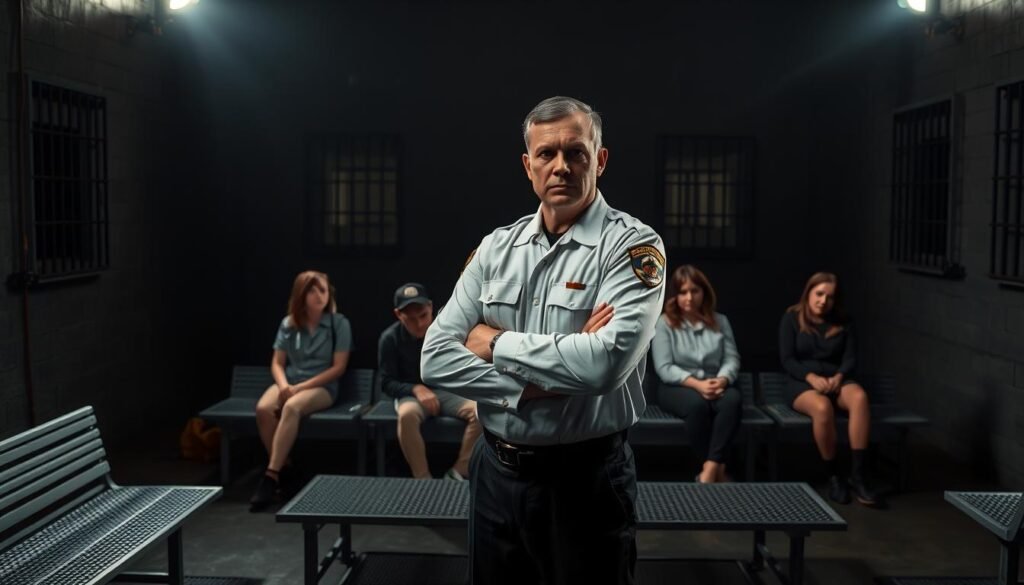
The basement of Jordan Hall at Stanford was turned into a mock prison. This was a key part of the mock prison study. Zimbardo and his team made a 35-foot corridor into a place to see how people act in extreme situations. It was designed to study conformity to roles in places like prisons.
The prison had three small cells, each 7 by 10 feet. Three prisoners were kept in these cells on simple cots. The cells were dark to make the prisoners uncomfortable.
A narrow corridor was the prison yard. A closet was made into a solitary confinement cell. This setup was meant to feel like a real prison.
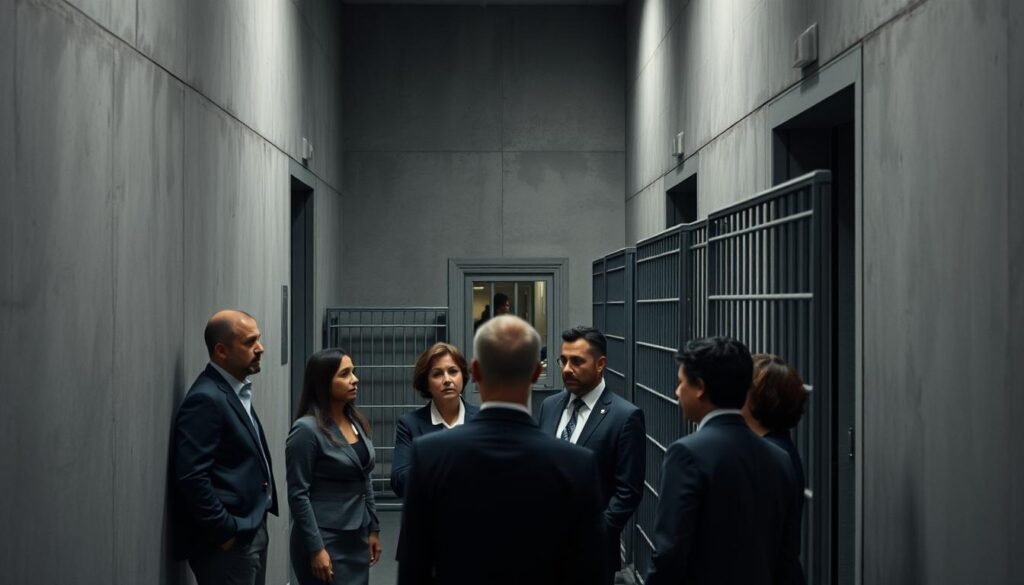
Guards worked from a bigger room, their command center. Two fake walls blocked outside views, one at the entrance and another along the cell block. This made the prison feel even more real.
Philip Zimbardo was the Prison Superintendent, and David Jaffe was the Warden. Guards worked in teams of three for eight hours. They could leave after their shifts, unlike the prisoners who stayed all the time. This difference led to big changes in how both groups acted.
Day-by-Day Breakdown of Escalating Guard Prisoner Dynamics
The Stanford Prison Experiment turned college students into cruel guards and scared prisoners in just hours. Each day, the cruelty grew as the power of authority took over. The quick change shocked the researchers who saw normal young men become intensely cruel.
Day 1: Mock Arrests and Initial Dehumanization
Real Palo Alto police officers surprised participants with mock arrests. They were charged with serious crimes. At Stanford’s basement prison, guards made prisoners wear numbers and chains.
They were forced to be naked, wear numbered smocks, and had their identities taken. This dehumanizing treatment started right away.
Day 2: The Prisoner Rebellion and Fire Extinguisher Response
At 2:30 AM, prisoners barricaded themselves and ripped off their ID numbers. Guards called for backup and used fire extinguishers on the inmates. The abuse got worse when guards made prisoners naked and took away their mattresses.
Leaders were sent to solitary, and guards punished everyone together. This showed how quickly power can turn to cruelty.
Day 3-5: Psychological Abuse and Emotional Breakdowns
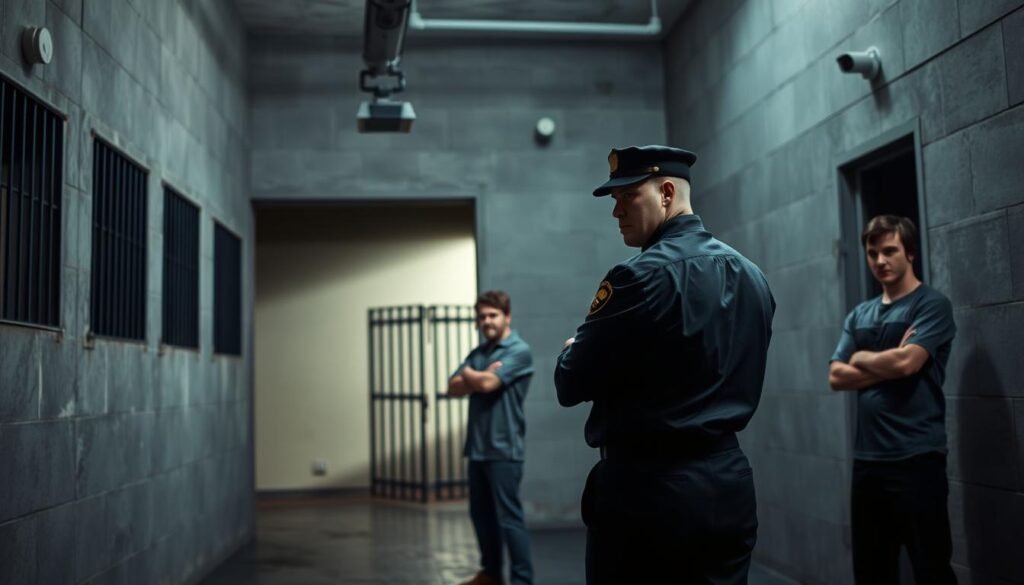
Guards made prisoners do endless push-ups and wouldn’t let them use the bathroom. They had to clean toilets with their hands and use buckets for the bathroom. Many inmates had emotional breakdowns as guards came up with more degrading punishments.
The cruelty between guards and prisoners became real and went beyond what was expected.
Day 6: Christina Maslach’s Intervention and Termination
Graduate student Christina Maslach saw guards taking prisoners to the bathroom with bags on their heads. She was shocked and told Zimbardo, “It’s terrible what you are doing to these boys!” Her reaction made Zimbardo stop the experiment after just six days.
Shocking Psychological Effects and Participant Breakdowns
The Stanford experiment showed us the dark side of human nature. It pushed ethical research standards to the limit. Participants felt deep emotional pain, lost their sense of self, and changed their behavior. This showed how deindividuation can change people in controlled settings.
Prisoner 8612 Douglas Korpi’s Mental Collapse After 36 Hours
Douglas Korpi’s breakdown shocked everyone just 36 hours in. He screamed about burning up inside and wanted to get out. Craig Haney decided to take him out of the study.
In 2017, Korpi said his breakdown was staged to get away. This made people question social psychology research and how real participants are.

Prisoner 819’s Guilt and Identity Crisis
On day five, Prisoner 819 felt deep emotional pain after talking to a priest. Guards made the other prisoners blame him. This made 819 feel guilty and forget he was in an experiment.
Philip Zimbardo had to remind him who he really was outside the prison.
Guard David Eshelman’s Theatrical Sadism
David Eshelman loved his role as a guard too much. His acting background helped him play a cruel character, like the warden from Cool Hand Luke. He made prisoners feel bad through mean commands and mind games.
His actions showed how playing a role can turn someone into an abuser.
Ethical Concerns in Research That Changed Psychology Forever
The Stanford Prison Experiment was a turning point for ethics in research. It showed how important it is to protect human subjects. The study’s mistakes changed how we do psychological experiments today.
The ethical controversy started with a lie. People signed up but didn’t know about the home arrests. This broke their trust. The experiment was so real, it was hard for them to leave, even if they wanted to.
Philip Zimbardo played two roles: the researcher and the prison boss. This made it hard to keep things fair. Without someone watching out for them, prisoner abuse happened.
The harm was quick and deep:
- People cried uncontrollably and got angry
- Some showed signs of stress and couldn’t think straight
- Guards made them stay awake as punishment
- They were made to do embarrassing things
These mistakes led to big changes in research:
- Universities in America started review boards
- They check experiments before they start
- Informed consent became more than just a signature
Today’s ethics in research rules are thanks to what happened at Stanford.
Scientific Validity Controversies and Modern Critiques
The Stanford Prison Experiment has faced a lot of criticism. Some say it doesn’t really show how people act under pressure. New evidence has come up, questioning the study’s main findings.
Thibault Le Texier’s 2018 Fraud Allegations
In 2018, French researcher Thibault Le Texier published “Histoire d’un Mensonge” (The History of a Lie). He found that guards were told how to act. Le Texier showed that Zimbardo had already decided what the results would be before starting.
Guards weren’t naturally mean; they were following a script. This was to fit what was expected in social psychology.
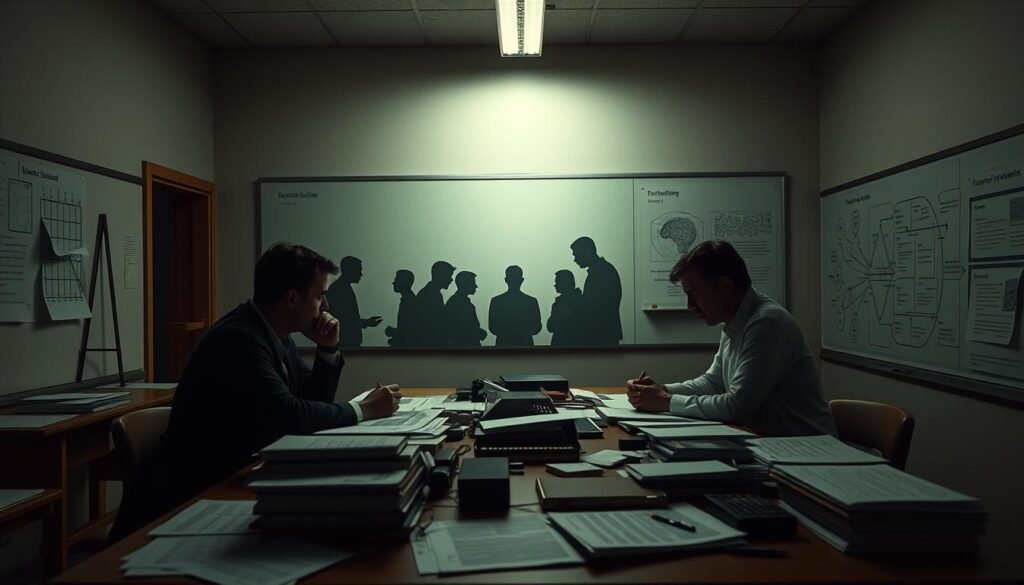
Demand Characteristics and Selection Bias Issues
In 1975, Ali Banuazizi and Siamak Movahedi talked about demand characteristics. They said people acted based on what they expected, not because of a real change. In 2007, Thomas Carnahan and Sam McFarland found selection bias.
The ads for the study hinted at “prison life.” This attracted people who were already likely to be aggressive and authoritarian.
Carlo Prescott’s Prison Consultant Revelations
Carlo Prescott, a consultant for the Stanford Prison Experiment, made shocking statements in 2005. He said guard tactics were based on his own experiences at San Quentin Prison. He shared these with the researchers before the study.
This makes it hard to believe that guard behavior was spontaneous.
The BBC Prison Study’s Contradictory Findings
The BBC Prison Study found different results. It showed that tyranny needs specific conditions and a leader to happen. This goes against Stanford’s findings about automatic role adoption.
Participants later confirmed many of the allegations in National Geographic’s documentary “The Stanford Prison Experiment: Unlocking the Truth,”. This raises big questions about this famous psychological study.
Abu Ghraib Parallels and Real-World Prison Abuse Connections
The Stanford Prison Experiment got a lot of attention in 2004. This was when pictures from Iraq’s Abu Ghraib prison came out. Philip Zimbardo, who led the study, pointed out abu ghraib parallels during the trials. He showed how normal people can do bad things in certain places.
Situational Forces in Military Prison Settings
The power dynamics at Abu Ghraib were similar to Stanford’s basement prison. American soldiers used tactics that were the same as those in the 1971 study. They included:
- Forcing prisoners to strip naked
- Depriving them of sleep for extended periods
- Using hoods to cover prisoners’ heads
- Making prisoners perform humiliating acts
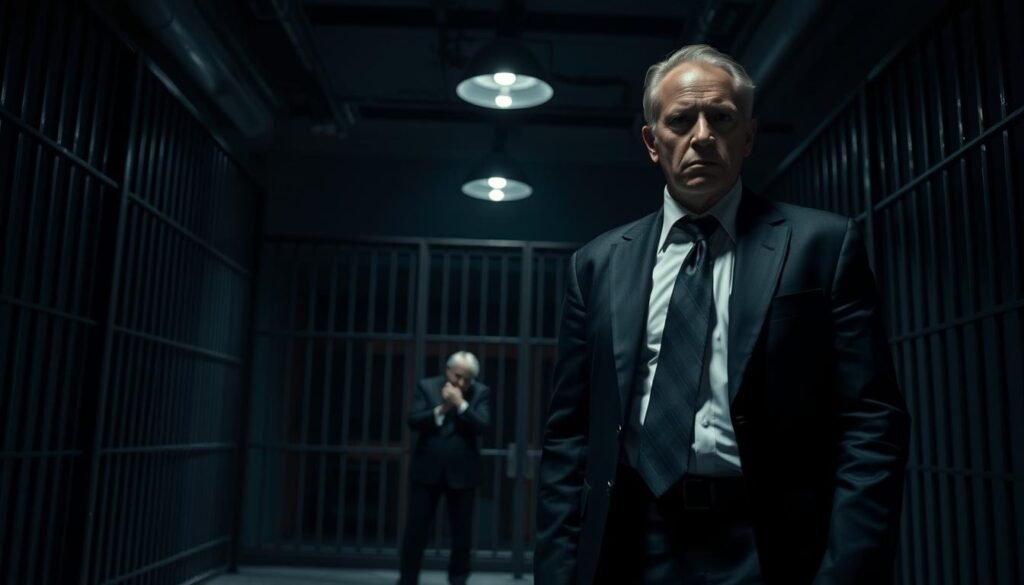
The situational behavior showed how prison settings affect people. Guards at both places weren’t inherently bad. They were regular people who acted badly because of the situation.
Deindividuation and Authority Influence in Systematic Abuse
Deindividuation happened when guards lost their individual identities. This explains how authority and conformity led to abuse. Guards felt like they were just following orders, not seeing prisoners as people.
At Abu Ghraib, soldiers followed orders and group norms that allowed cruelty. The chain of command pushed them to use harsh methods to get information. Like Stanford’s guards, they ignored their moral codes when the situation was too much.
The Lasting Impact on Psychology Research Ethics and Standards
The Stanford Prison Experiment changed psychology research ethics forever. In 1971, Stanford University’s events showed big gaps in protecting participants. These gaps led to big changes in how studies with humans are done today.
Today’s ethics in research come from what was learned from this experiment.

Institutional Review Board Requirements
Now, every university and research place needs Institutional Review Board (IRB) approval before starting studies with humans. IRBs check if studies meet strict ethics rules. They look at risks, safety plans, and can stop studies that might harm people.
This careful check stops experiments that could hurt people like at Stanford University.
Informed Consent and Participant Protection Protocols
Today, studies must have clear informed consent. Participants need to know:
- All possible risks to their mind or body
- They can leave the study anytime
- How their data will be kept safe
- Where to find help if they’re feeling bad
Researchers must watch how participants feel and stop the study if someone gets upset.
The American Psychological Association’s Ethical Guidelines
The American Psychological Association set strict rules for psychology studies. These rules say no studies can cause lasting harm. They also say researchers should not lie and must put participants’ safety first.
Every study must weigh its scientific value against the risks to people. This ensures the mistakes from Stanford’s basement won’t happen again.
Conclusion
The Stanford Prison Experiment is a landmark study in human psychology. Philip Zimbardo’s work showed how quickly people take on new roles. Guards, even those with no history of cruelty, became aggressive after just hours.
This study proved that situations can change behavior more than our personalities. The mock prison at Stanford University turned into a nightmare for those involved. Guards took away prisoners’ identities and dignity.
The environment pushed participants to extreme actions they wouldn’t normally consider. Philip Zimbardo explained this through deindividuation. This is when people lose their personal responsibility in group situations.
The study was stopped after just six days, but its effects are still felt today. It led to strict ethical guidelines in psychology research. Now, every university has review boards to protect participants.
The experiment showed that even good people can do bad things in certain situations. Philip Zimbardo’s work is still important for understanding abuse in prisons and military settings. It teaches us to question authority and resist harmful situations.
While the study has sparked debate, it has greatly influenced our understanding of human psychology. It shows the power of social forces in shaping our actions.