
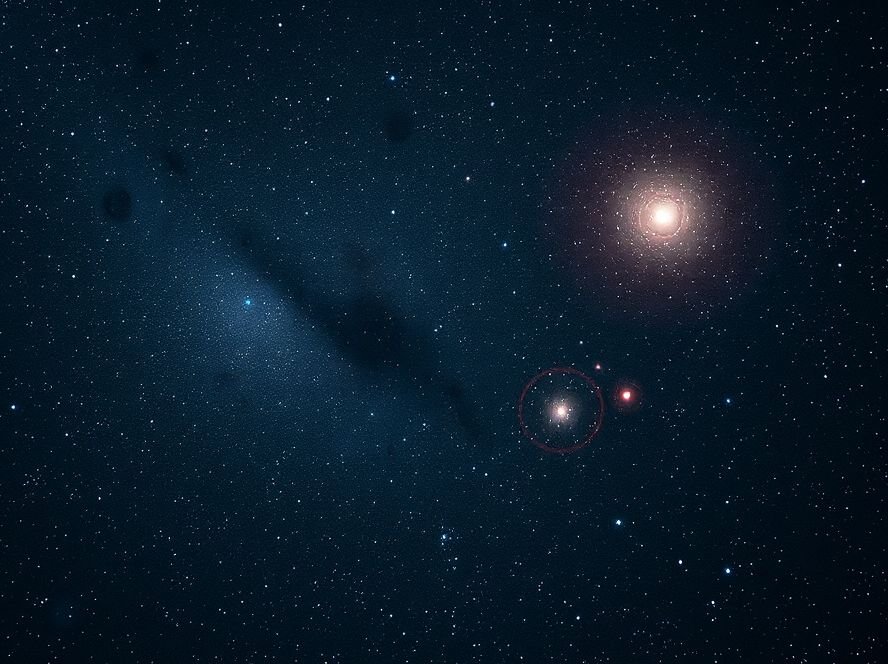
What is Star Clusters?
A star cluster is a group of stars that are gravitationally bound to each other, sharing a common origin. These clusters can vary in size, age, and composition, and they play a significant role in our understanding of the universe. They are primarily classified into two types: open clusters and globular clusters.
Why Are Star Clusters Important?
Star clusters are essential for astronomers because they serve as natural laboratories for studying stellar evolution. By observing clusters, scientists can learn about the life cycles of stars, the dynamics of stellar populations, and the overall structure of the galaxy.
- Understanding Stellar Evolution: Clusters contain stars at different stages of their life cycles, making it easier to study their development.
- Galactic Structure: The distribution of clusters helps astronomers map the structure of the Milky Way and other galaxies.
- Cosmological Insights: Studying the ages of clusters can provide insights into the age of the universe itself.
Types of Star Clusters
Star clusters are primarily divided into two main categories:
1. Open Clusters
Open clusters are loosely bound groups of stars that typically contain a few dozen to a few thousand stars. They are found in the disk of galaxies and are relatively young, with ages ranging from a few million to a few billion years. Examples include:
- Pleiades: Also known as the Seven Sisters, this cluster is visible to the naked eye and contains several hundred stars.
- Hyades: The closest open cluster to Earth, located in the constellation Taurus.
2. Globular Clusters
Globular clusters are tightly bound groups of stars, containing hundreds of thousands to millions of stars. They are generally much older than open clusters, often over 10 billion years old, and are found in the halos of galaxies. Notable globular clusters include:
- Messier 13: Also known as the Hercules Cluster, it is one of the brightest globular clusters in the northern sky.
- Omega Centauri: The largest globular cluster in the Milky Way, containing millions of stars.
How Are Star Clusters Formed?
Star clusters form from the gravitational collapse of gas and dust within molecular clouds. As regions within these clouds become dense, they collapse under their own gravity, leading to the formation of stars. When multiple stars form close together, they create a cluster.
In the case of open clusters, the stars may disperse over time due to gravitational interactions with nearby stars and gas. Conversely, globular clusters remain more stable due to their greater mass and density.
Real-World Applications of Studying Star Clusters
The study of star clusters has several practical applications:
- Astronomical Navigation: Understanding the positions and movements of clusters helps in navigation and mapping the night sky.
- Stellar Population Studies: By analyzing clusters, astronomers can infer the formation and evolution of stars in different environments.
- Cosmology: Measuring the distances and ages of clusters contributes to our understanding of the universe’s expansion and history.
Related Concepts
To fully appreciate star clusters, it’s essential to understand several related concepts:
- Molecular Clouds: The dense regions where stars, including those in clusters, form.
- Stellar Evolution: The process by which stars change over time, crucial for understanding the life cycles of stars in clusters.
- Galaxy Dynamics: The study of the motion of stars and clusters within galaxies, providing insights into galactic structure.
Conclusion
In summary, star clusters are fascinating celestial structures that provide invaluable insights into the universe. By understanding their formation, types, and importance, we can deepen our knowledge of astronomy and the cosmos. Whether you are an aspiring astronomer or simply curious about the stars, exploring star clusters can enhance your appreciation for the intricate workings of our universe.
As you gaze at the night sky, consider the distant star clusters and the stories they hold about the universe’s past, present, and future. Engaging with these celestial wonders can inspire a lifelong journey of exploration and discovery.