
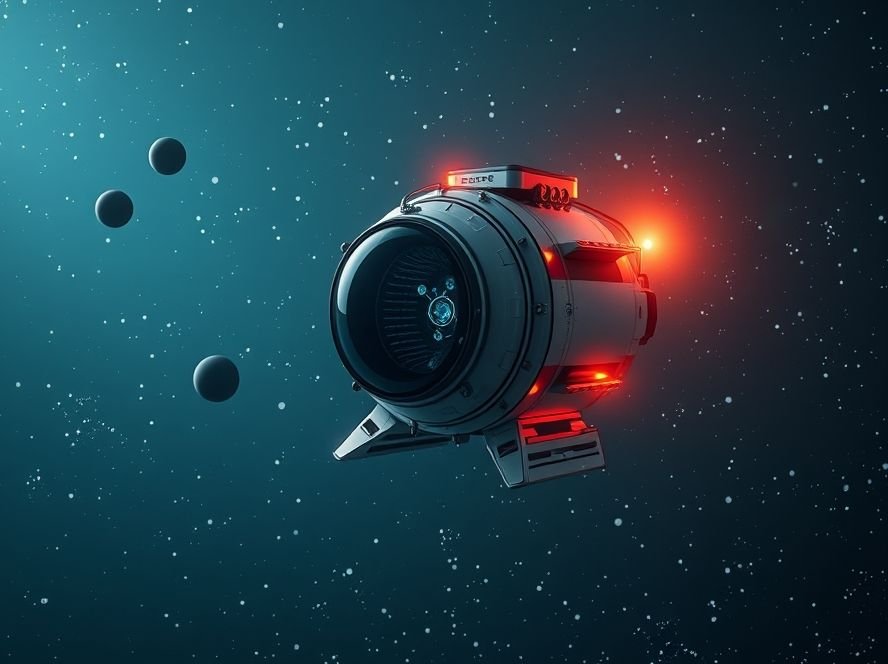
What is a Spacecraft?
A spacecraft is a vehicle designed for travel or operation in outer space. These complex machines can operate autonomously or be remotely controlled from Earth, and they play a crucial role in our exploration of the universe. Spacecraft are equipped with various instruments and technologies that allow them to gather data, conduct experiments, and perform a multitude of tasks in the vast expanse of space.
The Importance of Spacecraft in Space Exploration
Spacecraft have revolutionized our understanding of the universe. They enable us to explore distant planets, study celestial phenomena, and even search for potential extraterrestrial life. The data collected by spacecraft has led to significant advancements in science and technology, paving the way for future explorations.
Types of Spacecraft
Spacecraft can be categorized into several types, each serving different purposes:
- Satellites: These are objects placed into orbit around Earth or other celestial bodies. They are used for communication, weather monitoring, and scientific research.
- Probes: These spacecraft are designed to travel beyond Earth orbit to gather information about other planets, moons, and asteroids. Examples include Voyager 1 and Voyager 2.
- Rovers: Rovers are mobile robots that explore the surface of planets and moons. Notable examples are NASA’s Curiosity and Perseverance rovers on Mars.
- Space Stations: These are habitable artificial satellites, such as the International Space Station (ISS), where astronauts can live and work for extended periods.
Key Components of Spacecraft
Understanding the key components of a spacecraft is essential to grasp its functionality. Here are some of the primary elements:
- Power Systems: Spacecraft require energy to operate, usually supplied by solar panels or nuclear generators.
- Propulsion Systems: These systems enable spacecraft to maneuver in space. They can include chemical rockets, ion thrusters, or other advanced technologies.
- Communication Systems: Spacecraft communicate with mission control and transmit data back to Earth using radio waves.
- Sensors and Instruments: Equipped with various scientific instruments, spacecraft collect data on temperature, radiation, and other environmental factors.
Applications of Spacecraft in Everyday Life
Spacecraft have practical applications that extend beyond scientific research:
- Navigation: GPS satellites help us navigate our daily lives by providing accurate location information.
- Weather Forecasting: Weather satellites monitor atmospheric conditions, allowing for accurate weather predictions.
- Telecommunications: Communication satellites enable global connectivity, making phone calls and internet access possible anywhere in the world.
- Scientific Research: Data from spacecraft contributes to advancements in various fields, including climate science, medicine, and engineering.
Related Concepts in Space Exploration
Understanding spacecraft also involves familiarizing yourself with other related concepts:
- Astronautics: The science and technology of space travel and exploration.
- Astrobiology: The study of the potential for life in the universe, including the conditions necessary for life to exist.
- Orbital Mechanics: The study of the motions of objects in space under the influence of gravitational forces.
Conclusion: The Future of Spacecraft
As technology continues to evolve, the future of spacecraft holds immense possibilities. From missions to Mars to the exploration of distant exoplanets, spacecraft will remain at the forefront of human discovery. By understanding what a spacecraft is and its various applications, we can appreciate the critical role they play in expanding our knowledge of the cosmos.
Reflect on how spacecraft have influenced your life, from the GPS on your phone to the weather app you rely on. As we look to the stars, consider how you might engage with the ongoing journey of space exploration.