
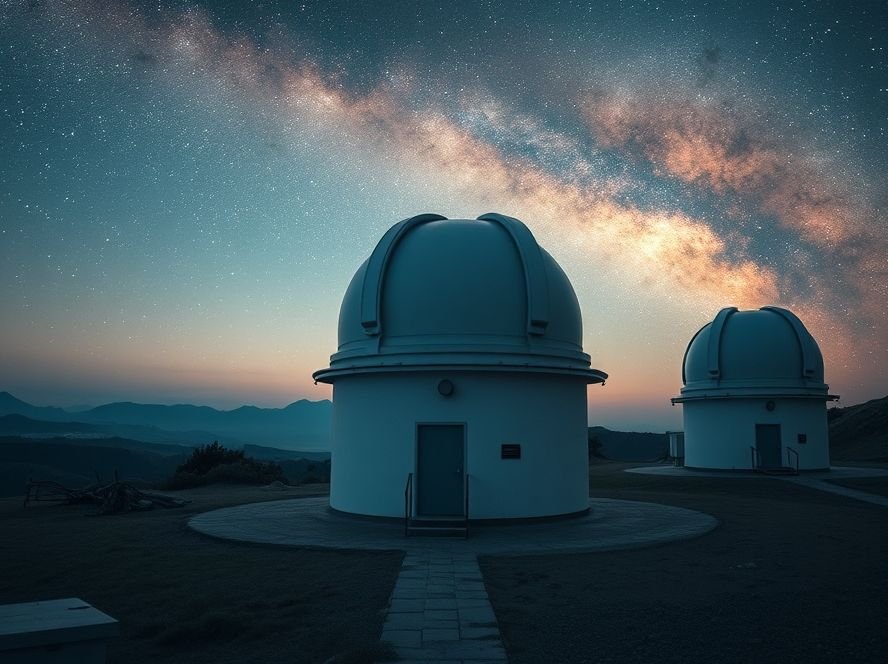
What is Space Observatories?
A space observatory is a scientific instrument designed to observe celestial objects from space. Unlike ground-based telescopes, space observatories are positioned outside the Earth’s atmosphere, allowing them to capture clearer images and data without atmospheric interference. These observatories utilize various wavelengths of light, including visible, infrared, and ultraviolet, to study the cosmos.
The Importance of Space Observatories
Space observatories play a crucial role in modern astronomy and astrophysics. They provide insights into the formation and evolution of the universe, the nature of celestial bodies, and the underlying physics that govern cosmic phenomena. Here are a few key reasons why space observatories are essential:
- Unobstructed Views: Being beyond the atmosphere allows observatories to avoid distortion and absorption of light, leading to clearer and more precise data.
- Multi-Wavelength Observations: Space observatories can observe in various wavelengths that are often blocked by the atmosphere, such as X-rays and gamma rays.
- Long-Term Monitoring: They can continuously monitor celestial events without the interruptions caused by weather or daylight.
Types of Space Observatories
Space observatories can be categorized based on the type of light they observe. Understanding these categories helps to appreciate their unique contributions to astronomy:
- Optical Observatories: These observatories, like the Hubble Space Telescope, observe visible light and provide stunning images of galaxies, nebulae, and star clusters.
- Infrared Observatories: Instruments like the James Webb Space Telescope capture infrared light, allowing scientists to study cooler objects in space, such as distant galaxies and star-forming regions.
- X-ray and Gamma-ray Observatories: Facilities like the Chandra X-ray Observatory and the Fermi Gamma-ray Space Telescope focus on high-energy phenomena, such as black holes and supernovae.
Applications of Space Observatories
Space observatories have numerous applications in both scientific research and practical technology development. Here are several notable examples:
- Discovering Exoplanets: Space observatories help identify planets outside our solar system by detecting changes in light from distant stars.
- Studying Dark Matter: Observatories collect data that can help infer the presence and distribution of dark matter in the universe.
- Climate Monitoring: Some space observatories are equipped to study Earth’s atmosphere and climate change, providing valuable data for environmental science.
How Space Observatories Work
Understanding the technology behind space observatories can enhance our appreciation for their capabilities. Here’s how they function:
- Launch: Space observatories are launched into orbit using rockets, reaching altitudes where they can operate without atmospheric interference.
- Data Collection: Equipped with advanced sensors, they collect light from celestial bodies. This data is then converted into images and spectra.
- Data Transmission: Observatories transmit the collected data back to Earth, where scientists analyze it using sophisticated software.
Real-World Examples of Space Observatories
Several space observatories have made significant contributions to our understanding of the universe:
- Hubble Space Telescope: Launched in 1990, Hubble has captured breathtaking images and provided data that have transformed our understanding of galaxies and the expansion of the universe.
- James Webb Space Telescope: Launched recently, JWST is designed to study the formation of stars and planets, offering insights into the early universe.
- Chandra X-ray Observatory: This observatory explores high-energy phenomena, studying black holes and supernova remnants.
Related Concepts
Understanding space observatories also involves familiarity with other related concepts:
- Ground-Based Observatories: Unlike their space counterparts, these telescopes operate from Earth and are affected by atmospheric conditions.
- Astrobiology: This field studies the potential for life in the universe, often utilizing data from space observatories to identify habitable zones around stars.
- Cosmology: The study of the universe’s origin and evolution is greatly enhanced by data collected from space observatories.
Practical Applications in Everyday Life
You might wonder how space observatories impact your everyday life. Here are a few ways you can apply this knowledge:
- Stay Informed: Follow the latest discoveries made by space observatories to enhance your understanding of the universe.
- Engage in STEM Education: Use the insights gained from space observatories to inspire interest in science, technology, engineering, and mathematics among young learners.
- Participate in Citizen Science: Many space missions allow the public to engage in data analysis, contributing to real scientific research.
Conclusion
Space observatories are invaluable tools in our quest to understand the universe. By observing celestial phenomena from above the Earth’s atmosphere, they provide unparalleled insights into the cosmos. As we continue to develop and deploy new observatories, our knowledge of the universe will only expand, leading to new discoveries and technologies that can benefit all of humanity. Embrace the excitement of space exploration and consider how you can contribute to this ever-evolving field.
What will you discover next about the universe?