
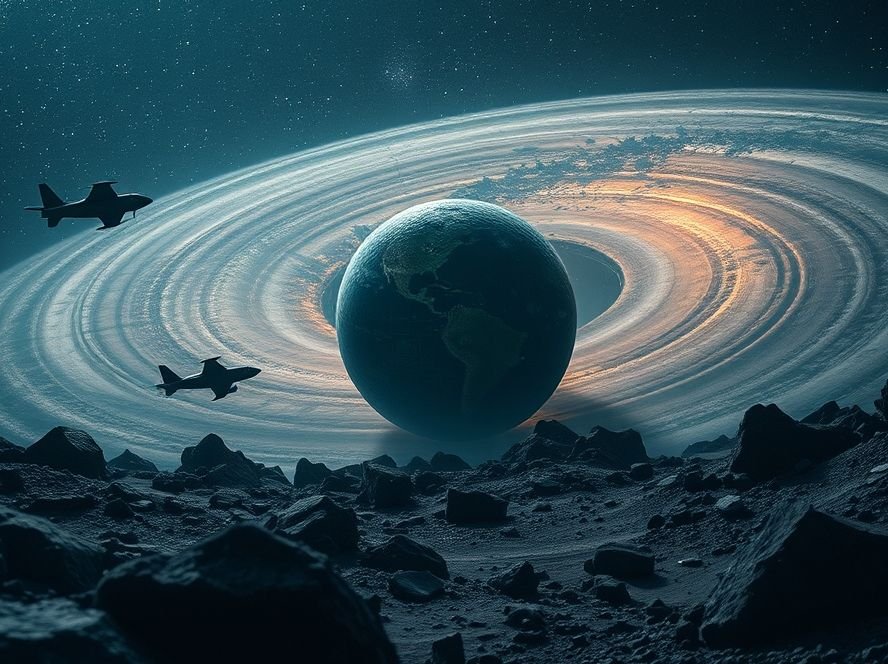
What is Space Facts?
Space facts refer to intriguing and scientifically verified information about outer space, celestial bodies, and the phenomena that occur beyond Earth’s atmosphere. These facts can range from details about planets, stars, and galaxies to insights about black holes, nebulae, and cosmic events. Understanding space facts is crucial for anyone interested in astronomy, physics, or simply curious about the universe.
The Importance of Knowing Space Facts
Knowing space facts not only satisfies our innate curiosity but also enhances our understanding of the universe’s complexity. As we explore space, we gain insights that can lead to technological advancements, inform scientific research, and even influence our philosophical perspectives about life and existence. With the rapid advancement of space exploration, from Mars rovers to exoplanet discoveries, having a grasp of space facts is more relevant than ever.
Fundamental Space Facts
- The Speed of Light: Light travels at approximately 299,792 kilometers per second (186,282 miles per second). This speed is the cosmic speed limit, and nothing can travel faster.
- The Size of the Universe: The observable universe is about 93 billion light-years in diameter, containing billions of galaxies, each with billions of stars.
- Black Holes: Formed from the remnants of massive stars, black holes have gravitational pulls so strong that not even light can escape from them.
- Exoplanets: There are thousands of known exoplanets, or planets outside our solar system, some of which are in the habitable zone of their stars.
Examples of Fascinating Space Facts
Here are a few specific examples of space facts that can ignite excitement and wonder:
- Jupiter: Jupiter is the largest planet in our solar system, with a diameter of about 86,881 miles (139,822 kilometers) and a mass that is more than twice that of all the other planets combined.
- Neutron Stars: A neutron star is so dense that a sugar-cube-sized amount of material from one would weigh about as much as all of humanity combined.
- Galaxies: The Milky Way galaxy, where Earth is located, is estimated to contain 100 to 400 billion stars and has a supermassive black hole at its center.
- Cosmic Microwave Background: This radiation is the afterglow of the Big Bang and fills the universe, providing a snapshot of the infant universe.
Practical Applications of Space Facts
Understanding space facts can have practical applications in various fields:
- Education: Teachers can use space facts to engage students in science and mathematics, making lessons more interesting and relatable.
- Technology Development: Knowledge about space can inspire innovations in technology, leading to advancements in fields like telecommunications, materials science, and robotics.
- Environmental Awareness: Understanding Earth’s position in the solar system and how it interacts with other celestial bodies can foster greater environmental stewardship.
How to Incorporate Space Facts into Daily Life
Here are some ways you can incorporate space facts into your daily life:
- Stargazing: Use apps like SkyView or Star Walk to identify constellations and planets while learning interesting facts about them.
- Science Projects: Create projects or experiments related to space facts, such as building a model of the solar system or simulating a lunar landing.
- Discussion Groups: Join or form discussion groups focused on astronomy where members can share and discuss fascinating space facts.
Related Concepts and Terms
To further enrich your understanding of space facts, here are some related concepts:
- Astronomy: The scientific study of celestial objects, space, and the universe as a whole.
- Astrophysics: A branch of astronomy that deals with the physics of celestial bodies and the universe.
- Cosmology: The study of the origin, evolution, and eventual fate of the universe.
- Planetary Science: The study of planets, moons, and planetary systems, particularly those of the solar system and the processes that form them.
Conclusion
Exploring space facts opens a window to the universe, revealing its mysteries and wonders. Whether you are a student, a science enthusiast, or just someone curious about the cosmos, understanding these facts enriches your knowledge and appreciation of the universe. By incorporating space facts into your daily life, you not only satisfy your curiosity but also inspire others to explore the vastness beyond our planet.
As you reflect on what you’ve learned, consider how you can apply this knowledge creatively—whether it’s through discussions, projects, or simply sharing fun facts with friends. The universe is vast, and there’s always more to discover!