
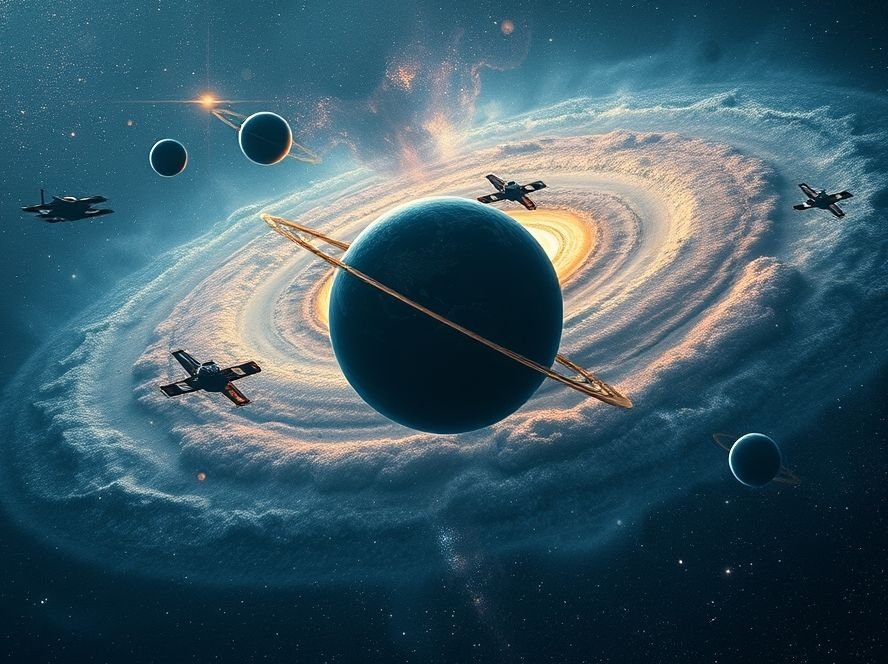
What is Space Art?
Space Art is a unique genre of art that captures the awe and wonder of the cosmos, blending scientific accuracy with creative expression. This form of art can include illustrations, paintings, digital art, and even sculptures that depict celestial bodies, astronomical phenomena, and the vastness of the universe. Artists in this field often draw inspiration from scientific discoveries, space missions, and the beauty of the night sky.
The Importance of Space Art
Space Art plays a crucial role in bridging the gap between science and the general public. By presenting complex astronomical concepts in visually appealing ways, artists can evoke curiosity and wonder about the universe. Space Art not only ignites interest in science but also serves as a powerful tool for education and outreach.
1. Inspiring Curiosity
One of the primary functions of Space Art is to inspire curiosity about the universe. For instance, an artist might create a stunning visualization of a black hole, showcasing its swirling accretion disk. This can prompt viewers to learn more about black holes, their formation, and their role in the cosmos.
2. Communicating Scientific Ideas
Artists often collaborate with scientists to create accurate representations of astronomical phenomena. For example, the Hubble Space Telescope has inspired countless artists to depict the breathtaking images it captures. These artworks can help the public understand complex ideas about galaxies, nebulae, and the life cycles of stars.
Applications of Space Art
Space Art has various practical applications, from education to entertainment. Here are some examples:
- Educational Resources: Many educators use Space Art in classrooms to spark interest in astronomy and space science. Visual aids can enhance lessons and help students grasp difficult concepts.
- Museum Exhibits: Museums often feature Space Art in exhibitions dedicated to astronomy, allowing visitors to experience the beauty of the universe through artistic interpretations.
- Media and Entertainment: Films, television shows, and video games frequently use Space Art to create immersive environments that transport audiences to other worlds.
How to Use Space Art in Everyday Life
Integrating Space Art into your daily life can be both enjoyable and enlightening. Here are some practical ways to do this:
- Decorate Your Space: Consider using prints or posters of Space Art to beautify your home or office. This can serve as both decoration and inspiration.
- Engage with Art Communities: Join online platforms or local groups focused on Space Art. Sharing your own creations or appreciating others’ work can enhance your understanding and enjoyment of the art form.
- Incorporate Art in Education: If you’re an educator, utilize Space Art in your curriculum to teach students about space and science in a captivating way.
Related Concepts in Space Art
Space Art is interconnected with several other concepts in the realm of science and creativity:
- Astronomy: The scientific study of celestial bodies and the universe, which serves as the foundation for Space Art.
- Astrophotography: Capturing images of astronomical objects through photography, which can be used as inspiration for artistic interpretations.
- Science Fiction: A genre that often incorporates elements of Space Art to visualize futuristic concepts and space exploration.
Conclusion and Call to Action
Space Art is not just a visual delight; it serves as a bridge between science and art, enhancing our understanding of the universe while inspiring curiosity. Whether you are an artist, educator, or simply a space enthusiast, embracing Space Art can enrich your appreciation of the cosmos. Consider exploring this fascinating field further, whether by creating your own art, visiting exhibits, or simply pondering the beauty of the universe through artistic lenses. How can you incorporate Space Art into your life today?