
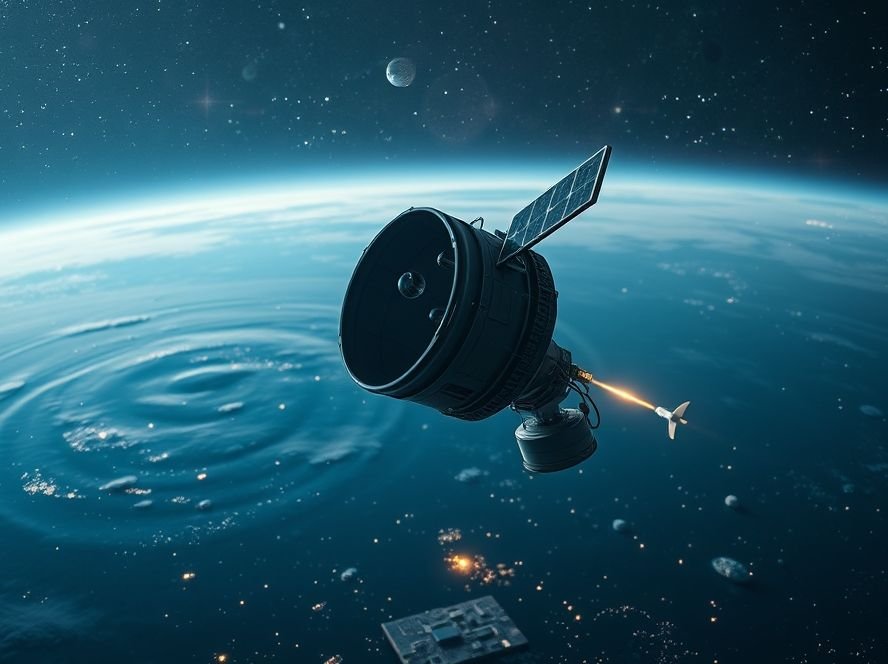
What is Satellite Technology?
Satellite technology refers to the design, deployment, and utilization of artificial satellites to gather information, enhance communication, and support navigation across the globe. This technology plays a crucial role in various sectors, including telecommunications, weather forecasting, and scientific research.
The Importance of Satellite Technology
Understanding satellite technology is essential for grasping how we communicate, navigate, and monitor our planet. From GPS systems that guide our daily travels to satellites that observe climate change, this technology is intertwined with many aspects of modern life.
How Does Satellite Technology Work?
Satellite technology operates through a complex interplay of hardware and software components. At its core, a satellite is an object launched into orbit around the Earth or another celestial body. These satellites can be categorized into various types based on their function, including:
- Communication Satellites: Facilitate telecommunications by transmitting signals for television, internet, and phone services.
- Weather Satellites: Monitor atmospheric conditions and help predict weather patterns.
- Earth Observation Satellites: Capture images and collect data about the Earth’s surface, aiding in environmental monitoring and disaster response.
- Navigation Satellites: Provide positioning data for GPS services, crucial for navigation and mapping.
Components of Satellite Technology
Satellite technology encompasses several key components:
- Launch Vehicles: Rockets that transport satellites into orbit.
- Onboard Instruments: Devices that collect data, such as cameras and sensors.
- Ground Stations: Facilities that communicate with satellites, receiving and sending data.
Applications of Satellite Technology
Satellite technology is integral to numerous applications that enhance our daily lives and scientific understanding:
1. Telecommunications
Satellites enable global communication networks, allowing phone calls, internet access, and broadcasting services. For instance, companies like SpaceX are launching satellite constellations to provide internet access to underserved areas.
2. Earth Monitoring
Satellites monitor environmental changes, track natural disasters, and support climate research. Programs like NASA’s Earth Observing System utilize satellites to observe phenomena such as deforestation and urbanization.
3. Navigation
Global Positioning System (GPS) relies on a network of satellites to provide accurate location data for navigation. This technology is widely used in vehicles, smartphones, and even for tracking wildlife.
4. Scientific Research
Satellites contribute to scientific research by providing data for fields like astronomy and planetary science. For example, the Hubble Space Telescope has revolutionized our understanding of the universe since its launch in 1990.
How to Utilize Satellite Technology in Daily Life
Integrating satellite technology into your daily life can be straightforward:
- GPS Navigation: Use navigation apps on your smartphone to get directions and traffic updates.
- Weather Forecasting: Check reliable weather apps that utilize satellite data for accurate forecasts.
- Telecommunications: Take advantage of satellite internet services if you live in rural or remote areas.
Related Concepts in Satellite Technology
Several terms and concepts are closely related to satellite technology:
- Aerospace Engineering: The field that deals with the design and development of aircraft and spacecraft.
- Remote Sensing: The acquisition of information about an object or area from a distance, often through satellite imagery.
- Geospatial Technology: Tools and techniques used to collect, analyze, and visualize geographic data, often involving satellite data.
Conclusion: The Future of Satellite Technology
As technology continues to advance, satellite technology will play an even more significant role in our lives. From improving global communication to supporting climate science, the potential applications are vast. Understanding this technology not only enriches our knowledge of science but also empowers us to utilize it in practical ways.
In reflecting on the importance of satellite technology, consider how it influences your daily life and the broader implications it has for our understanding of Earth and beyond. How can you leverage this knowledge to stay informed and connected?