
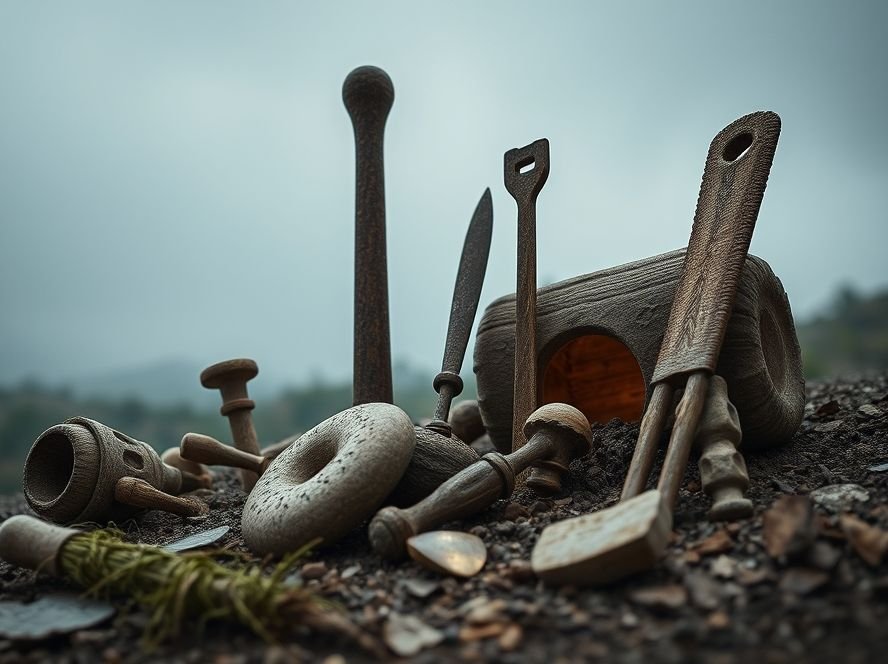
What is Prehistoric Tools?
Prehistoric tools refer to the various implements and devices created by early humans before the advent of written history. These tools mark a significant milestone in human evolution, showcasing the ingenuity and adaptability of our ancestors. From simple hand axes to complex hunting weapons, prehistoric tools provide insight into the daily lives, survival strategies, and social structures of ancient civilizations.
The Importance of Prehistoric Tools
The study of prehistoric tools is crucial for understanding how early humans interacted with their environment. These tools are not just artifacts; they are a window into the past, revealing how our ancestors lived, hunted, and developed technologies over time. By examining these tools, archaeologists can piece together the puzzle of human evolution and migration.
Types of Prehistoric Tools
Prehistoric tools can be categorized into several types based on their functionality and the materials used. Here are the primary categories:
- Stone Tools: The most common type, including hand axes, scrapers, and blades made from flint or obsidian.
- Bone Tools: Implements made from animal bones, used for a variety of purposes such as sewing and digging.
- Wooden Tools: Tools crafted from wood, often used for hunting and gathering.
- Composite Tools: These are made from multiple materials, combining stone points with wooden shafts for spears or arrows.
How Were Prehistoric Tools Made?
The manufacturing of prehistoric tools involved a process known as knapping, where stones were struck to create sharp edges. Early humans learned to shape materials to suit their needs, which required significant skill and knowledge of the properties of different materials. The tools were often made in specific shapes and sizes, depending on their intended use, demonstrating a sophisticated understanding of engineering.
Applications of Prehistoric Tools in Daily Life
Prehistoric tools had a direct impact on the survival and development of early human societies. Here are some practical applications:
- Hunting: Tools like spears and atlatls enabled early humans to hunt larger game, increasing their food sources.
- Gathering: Sharp stone tools allowed for the efficient gathering of plant materials and preparation of food.
- Crafting: Bone and wood tools facilitated the creation of clothing, shelters, and other necessities for survival.
- Social Structures: The sharing and teaching of tool-making skills fostered community bonds and social learning.
Famous Prehistoric Tool Sites
Several archaeological sites around the world have provided significant insights into prehistoric tool use. Some notable ones include:
- Olduvai Gorge, Tanzania: Renowned for its rich deposits of early stone tools dating back millions of years.
- La Chapelle-aux-Saints, France: A site where Neanderthal tools were discovered, showcasing their sophisticated tool-making abilities.
- Blombos Cave, South Africa: Contains evidence of early human creativity, including engraved ochre and advanced stone tools.
Related Concepts in Prehistoric Studies
Prehistoric tools are intricately linked to several other concepts in archaeology and anthropology:
- Hominid Evolution: Understanding how tool use influenced the development of early hominids.
- Cultural Evolution: Exploring how technological advancements shaped social structures and cultural practices.
- Archaeological Stratigraphy: The study of layered deposits to understand the chronological order in which tools were used.
Conclusion: The Legacy of Prehistoric Tools
Prehistoric tools stand as a testament to human innovation and adaptation. They not only facilitated survival but also laid the groundwork for the development of complex societies. By understanding these tools, we gain valuable insights into our collective past and the evolution of human culture.
Practical Applications Today
Understanding prehistoric tools can inspire modern innovation. Here’s how:
- Craftsmanship Skills: Learning ancient techniques can enhance modern crafting and tool-making skills.
- Environmental Awareness: Recognizing the resourcefulness of our ancestors can encourage sustainable practices today.
- Cultural Appreciation: Engaging with the history of tools fosters a deeper appreciation for human ingenuity and creativity.
Final Thoughts
The study of prehistoric tools is more than an academic pursuit; it is an exploration of human resilience and creativity. As we reflect on the ingenuity of our ancestors, we can find inspiration in their ability to adapt and innovate, encouraging us to apply these lessons in our daily lives.