
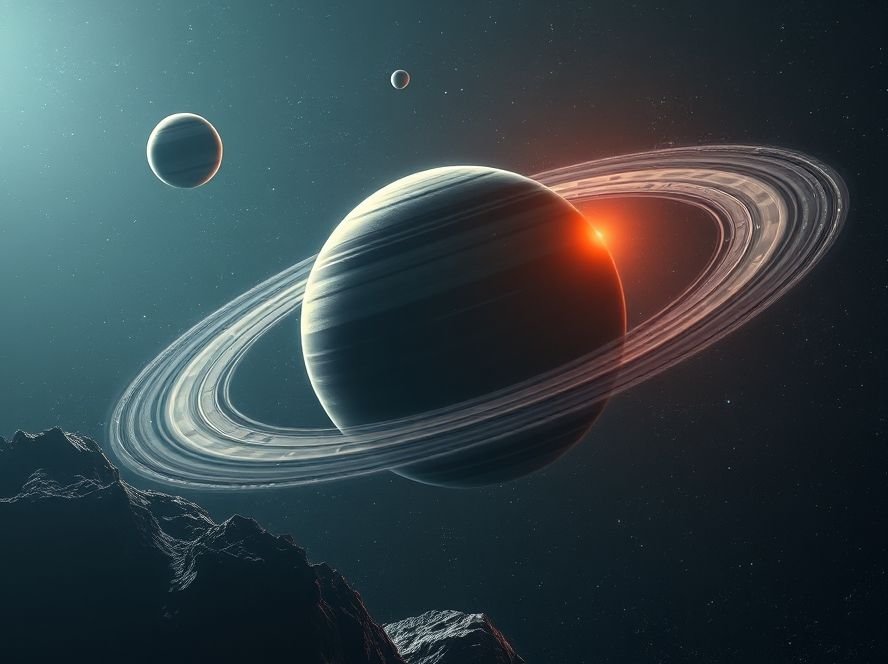
What is Planets?
At its core, the term planets refers to celestial bodies that orbit a star, such as our Sun, and are large enough to be rounded by their own gravity. Unlike stars, planets do not produce their own light; instead, they reflect the light from their parent star. Understanding planets is crucial for various scientific fields, including astronomy, astrophysics, and planetary science.
The Importance of Understanding Planets
The study of planets enhances our knowledge of the universe and our place within it. Planets can tell us about the formation of solar systems, the potential for life beyond Earth, and the conditions necessary for habitability. As we explore planets, we also uncover clues about the history of our own planet and the future of our solar system.
Types of Planets
Planets can be categorized into two primary types: terrestrial and gas giants. Each type has distinct characteristics.
- Terrestrial Planets: These planets, such as Earth, Mars, Venus, and Mercury, are rocky and have solid surfaces. They are generally smaller and possess a higher density than gas giants.
- Gas Giants: Jupiter and Saturn are classified as gas giants. They are significantly larger than terrestrial planets and are primarily composed of hydrogen and helium, lacking a well-defined solid surface.
How Planets Form
The formation of planets is a complex process that occurs within a protoplanetary disk—a rotating disk of dense gas and dust surrounding a newly formed star. Over millions of years, particles within the disk collide and stick together, gradually forming larger bodies called planetesimals. These planetesimals collide to form protoplanets, which can eventually become the planets we observe today.
Real-World Applications of Planetary Knowledge
Understanding planets is not just an academic pursuit; it has real-world applications. Here are a few examples:
- Astronomy and Space Exploration: Knowledge of planets informs space missions, such as NASA’s Mars Rover missions, which seek to explore the Martian surface for signs of past life.
- Astrobiology: By studying the atmospheres and conditions of other planets, scientists can assess the potential for life elsewhere in the universe.
- Climate Studies: Understanding planetary atmospheres helps us model climate change on Earth by providing comparative data from other planets.
How to Explore Planets in Your Daily Life
Curious about planets? Here are some practical ways to explore them in your daily life:
- Stargazing: Use a telescope or binoculars to observe planets from your backyard. Websites and apps can help you locate planets in the night sky.
- Educational Resources: Engage with documentaries, podcasts, and books that discuss planets and space exploration.
- Planetarium Visits: Check out local planetariums for shows and exhibits focused on astronomy and planetary science.
Related Concepts in Planetary Science
Understanding planets also involves related concepts such as:
- Moons: Many planets have natural satellites, or moons, which can provide further insights into the dynamics of planetary systems.
- Asteroids and Comets: These celestial bodies can influence planetary formation and dynamics.
- Exoplanets: The study of planets outside our solar system expands our understanding of planetary systems and the potential for life beyond Earth.
Conclusion
In summary, understanding what planets are and their role in the universe helps us grasp the complexities of our solar system and the broader cosmos. Whether you are a budding astronomer or just a curious individual, there are many ways to explore and learn about these fascinating celestial bodies.
Take time to appreciate the planets and consider how they might influence our future exploration and understanding of life beyond Earth. As we continue to learn about the cosmos, who knows what other wonders await us?