
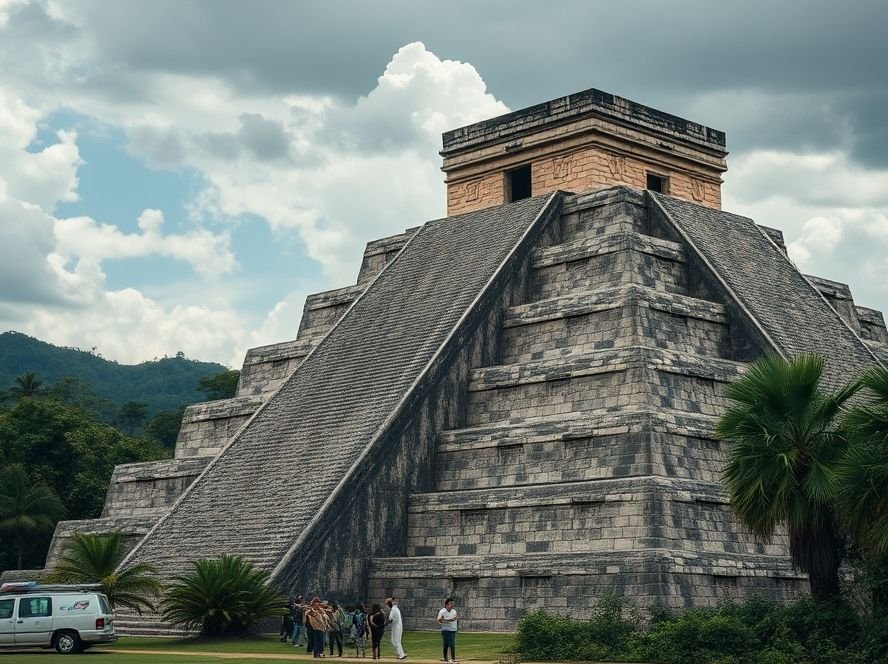
What is Mayan Civilization?
The Mayan Civilization, known for its remarkable achievements in architecture, mathematics, astronomy, and art, was a Mesoamerican culture that thrived from approximately 2000 BCE to the arrival of the Spanish in the 16th century CE. The civilization is primarily located in present-day Mexico, Guatemala, Belize, Honduras, and El Salvador. The Mayans are renowned for their sophisticated writing system, known as hieroglyphics, and their intricate calendar system that reflects their deep understanding of astronomy.
Historical Context and Importance
The significance of the Mayan Civilization lies in its cultural and scientific contributions, which continue to influence modern societies. The Mayans developed complex city-states, each with its own ruler and deities. They built monumental structures, including pyramids, temples, and observatories, which exemplified their architectural prowess. The civilization reached its peak during the Classic Period (250-900 CE), when it saw advancements in various fields, including agriculture, trade, and governance.
Key Features of Mayan Civilization
- Writing System: The Mayans created one of the most sophisticated writing systems in pre-Columbian Americas, consisting of glyphs that represented sounds and ideas.
- Architecture: Their architectural achievements, such as the famous pyramids of Tikal and Chichen Itza, showcase their engineering skills and religious significance.
- Astronomy: The Mayans were advanced astronomers who developed accurate calendars and tracked celestial events, influencing agricultural practices.
- Social Structure: The society was hierarchically structured, with a ruling class, priests, merchants, and farmers, each playing a vital role in the functioning of their city-states.
Religious Beliefs and Practices
The Mayan religion was polytheistic, with a pantheon of gods representing natural elements and forces. Rituals often included offerings, ceremonies, and even human sacrifices to appease the gods. The Mayans believed in an afterlife and had specific practices for burial, which varied based on social status.
Decline of the Mayan Civilization
Despite its achievements, the Mayan Civilization faced a decline during the late Classic Period. Factors contributing to this decline may include environmental changes, warfare, and societal upheaval. However, it is essential to note that while the civilization experienced a significant collapse, descendants of the Mayans continue to live in the region today, maintaining aspects of their cultural heritage.
Applications and Modern Relevance
Understanding the Mayan Civilization is crucial for various fields, including anthropology, archaeology, and environmental science. Today, researchers study ancient Mayan ruins and artifacts to gain insights into human behavior, societal development, and environmental adaptation. Furthermore, the Mayan calendar and mathematical concepts have intrigued modern mathematicians and scientists, leading to a resurgence of interest in ancient knowledge.
Practical Applications of Mayan Knowledge
Individuals interested in history, archaeology, or cultural studies can apply knowledge of the Mayan Civilization in various ways:
- Participating in archaeological digs or studies to bridge the gap between the past and the present.
- Engaging with local Mayan communities to learn about their traditions and cultural practices.
- Utilizing Mayan mathematical concepts in educational programs to enhance understanding of ancient numeracy.
Related Concepts
- Aztec Civilization: Another prominent Mesoamerican civilization known for its own unique contributions, including the famous Aztec Empire.
- Inca Civilization: A South American civilization that was contemporary to the Mayans, known for its extensive road systems and architectural achievements.
- Archaeology: The study of human history through excavation and analysis of artifacts, which includes the investigation of Mayan sites.
Conclusion
The Mayan Civilization is a crucial part of our understanding of ancient cultures and their contributions to human history. By exploring their achievements in writing, architecture, and astronomy, we gain valuable insights into the complexities of human society and the evolution of civilizations. Reflecting on the Mayan legacy encourages us to appreciate the richness of cultural diversity and the lessons that can be learned from the past.
As you engage with the knowledge of the Mayan Civilization, consider how these ancient insights can influence your understanding of modern society and your responsibilities toward cultural preservation.