
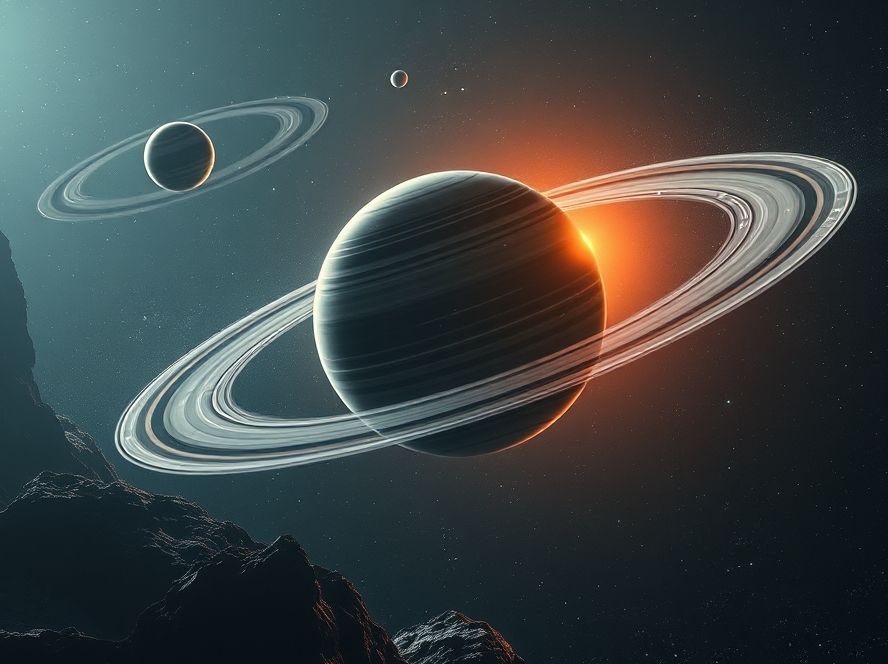
What is Exoplanetary Systems: A Comprehensive Overview
Exoplanetary systems refer to star systems that host planets outside our solar system, known as exoplanets. These systems are of immense interest to astronomers and scientists as they offer insights into planetary formation, evolution, and the potential for life beyond Earth. In this article, we will delve deeply into the various aspects of exoplanetary systems, their significance in the field of astronomy, and their practical applications in our quest to understand the universe.
The Importance of Studying Exoplanetary Systems
Understanding exoplanetary systems is crucial for several reasons:
- Planetary Diversity: Exoplanets exhibit a wide range of sizes, compositions, and orbits, challenging our previous notions about how planets form and evolve.
- Potential for Life: Studying these systems helps us identify planets that may harbor conditions suitable for life, thus expanding our understanding of where life might exist.
- Insights into Our Own Solar System: By comparing exoplanets to those in our solar system, we can better understand the formation and dynamics of planetary systems.
How are Exoplanets Discovered?
The discovery of exoplanets has been revolutionized by several techniques:
- Transit Method: This technique involves monitoring a star’s brightness for periodic dips, indicating a planet passing in front of it. The Kepler Space Telescope has successfully utilized this method to identify thousands of exoplanets.
- Radial Velocity Method: Also known as the Doppler method, it measures variations in a star’s velocity due to the gravitational pull of an orbiting planet. This method helps determine the mass of the exoplanet.
- Direct Imaging: Although challenging, astronomers can directly capture images of exoplanets by blocking out the star’s light, allowing them to study the planet’s atmosphere and surface.
Characteristics of Exoplanetary Systems
Exoplanets can vary widely in their characteristics:
- Types of Exoplanets: These include gas giants, super-Earths, and terrestrial planets. Each type has distinct atmospheres and potential for habitability.
- Orbital Patterns: Exoplanets can have eccentric orbits or be located in the habitable zone where conditions might support liquid water.
- Atmospheric Composition: Understanding the atmospheres of exoplanets, such as the presence of water vapor or methane, is key to assessing their potential for life.
Practical Applications of Exoplanetary Research
Research on exoplanetary systems has several practical applications:
- Astronomical Technology Development: The search for exoplanets has led to advancements in telescope technology and observational techniques.
- Astrobiology: By identifying potentially habitable exoplanets, scientists can focus their research efforts on these worlds in the search for extraterrestrial life.
- Space Exploration Missions: The knowledge gained from exoplanet research informs future missions targeting nearby stars with promising exoplanets for exploration.
Related Concepts in Astronomy
The study of exoplanetary systems is intricately connected to various other astronomical concepts:
- Star Formation: Understanding how stars form is crucial for comprehending the environments in which exoplanets develop.
- Galactic Structure: The location of exoplanetary systems within galaxies can reveal patterns about star and planet formation across the universe.
- Cosmology: The study of the universe’s origins and structure can provide context for the distribution and formation of exoplanetary systems.
Conclusion: The Future of Exoplanetary Research
As we continue to explore the cosmos, the study of exoplanetary systems will play a vital role in expanding our understanding of the universe. With ongoing advancements in technology and methodologies, the potential for discovering new exoplanets and understanding their characteristics is greater than ever. By engaging with these systems, we not only learn about the planets themselves but also gain insight into our own planet’s place in the cosmos.
Reflection and Application
For those curious about science and space, engaging with the topic of exoplanetary systems can be both fascinating and informative. Consider exploring online resources, joining astronomy clubs, or participating in citizen science projects that focus on exoplanet research. By doing so, you can contribute to our collective understanding of the universe and perhaps even inspire the next generation of astronomers!