
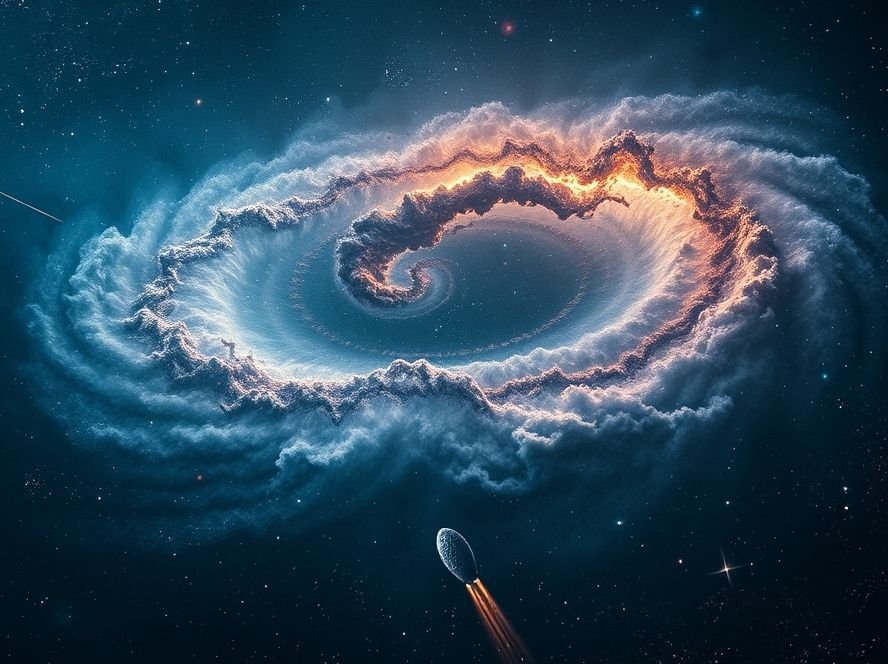
What is Astrophysical Phenomena?
Astrophysical phenomena refer to various natural events and processes that occur in the universe, involving celestial bodies and cosmic events. These phenomena include everything from the formation of stars and galaxies to the behavior of black holes and the dynamics of cosmic microwave background radiation. Understanding astrophysical phenomena is crucial for grasping the fundamental workings of our universe.
Importance of Astrophysical Phenomena
Astrophysical phenomena play a vital role in our understanding of the universe. They provide insights into the origins of cosmic structures, the life cycles of stars, and the fundamental forces that govern matter and energy in space. By studying these phenomena, scientists can make significant discoveries about the nature of time, space, and the universe itself.
Key Types of Astrophysical Phenomena
There are several key types of astrophysical phenomena that scientists study:
- Stellar Formation: The process by which stars are born from clouds of gas and dust in space.
- Supernovae: Explosive deaths of stars that can outshine entire galaxies for a short time.
- Black Holes: Regions in space where gravity is so strong that nothing, not even light, can escape.
- Galaxy Formation: The process by which galaxies are formed and evolve over time.
- Cosmic Microwave Background Radiation: The afterglow radiation from the Big Bang, providing a snapshot of the early universe.
Real-World Examples of Astrophysical Phenomena
To illustrate the significance of astrophysical phenomena, consider the following examples:
- The Birth of Stars: Stars like our Sun form in nebulae, vast clouds of gas and dust. Understanding this process helps astronomers predict the characteristics of new stars.
- Supernova Explosions: The Crab Nebula is the remnant of a supernova explosion observed in 1054 AD. This event helped scientists understand stellar evolution and nucleosynthesis.
- Black Holes and Their Effects: The discovery of gravitational waves from colliding black holes has opened new avenues for studying these enigmatic objects.
- Galactic Interactions: The collision of the Milky Way with the Andromeda galaxy is a well-studied phenomenon that will shape the future of our galaxy.
Applications of Astrophysical Phenomena
Understanding astrophysical phenomena has practical applications beyond theoretical astrophysics:
- Astronomy and Space Exploration: Knowledge of stellar and galactic formation helps in telescope design and mission planning for space exploration.
- Satellite Technology: Insights from astrophysical phenomena improve satellite technology, enhancing communication and weather forecasting.
- Climate Science: Studying cosmic rays and solar activity helps in understanding climate patterns on Earth.
How to Explore Astrophysical Phenomena in Everyday Life
While astrophysical phenomena may seem distant, there are ways to engage with them in daily life:
- Stargazing: Use apps to identify constellations and celestial events visible from your location.
- Visit Planetariums: Attend shows and exhibits that explain astrophysical phenomena, enhancing your understanding of the universe.
- Participate in Citizen Science: Join projects that contribute to astronomical research, such as classifying galaxies.
Related Concepts in Astrophysics
Astrophysical phenomena are interconnected with several related concepts:
- Cosmology: The study of the universe’s origin, evolution, and eventual fate.
- Astrobiology: The search for life beyond Earth, often influenced by our understanding of astrophysical environments.
- Gravitational Physics: The study of gravitational forces, essential for understanding phenomena like black holes and galaxy formation.
Conclusion
Astrophysical phenomena encompass a wide range of cosmic events and processes that are fundamental to our understanding of the universe. By exploring these phenomena, we not only satisfy our curiosity about the cosmos but also unlock practical applications that can benefit society. As we continue to investigate the mysteries of space, we encourage you to look up at the stars and ponder the incredible processes that govern our universe.
Reflection: Consider how the knowledge of astrophysical phenomena can inspire you to learn more about the universe and possibly pursue a career in science or space exploration.