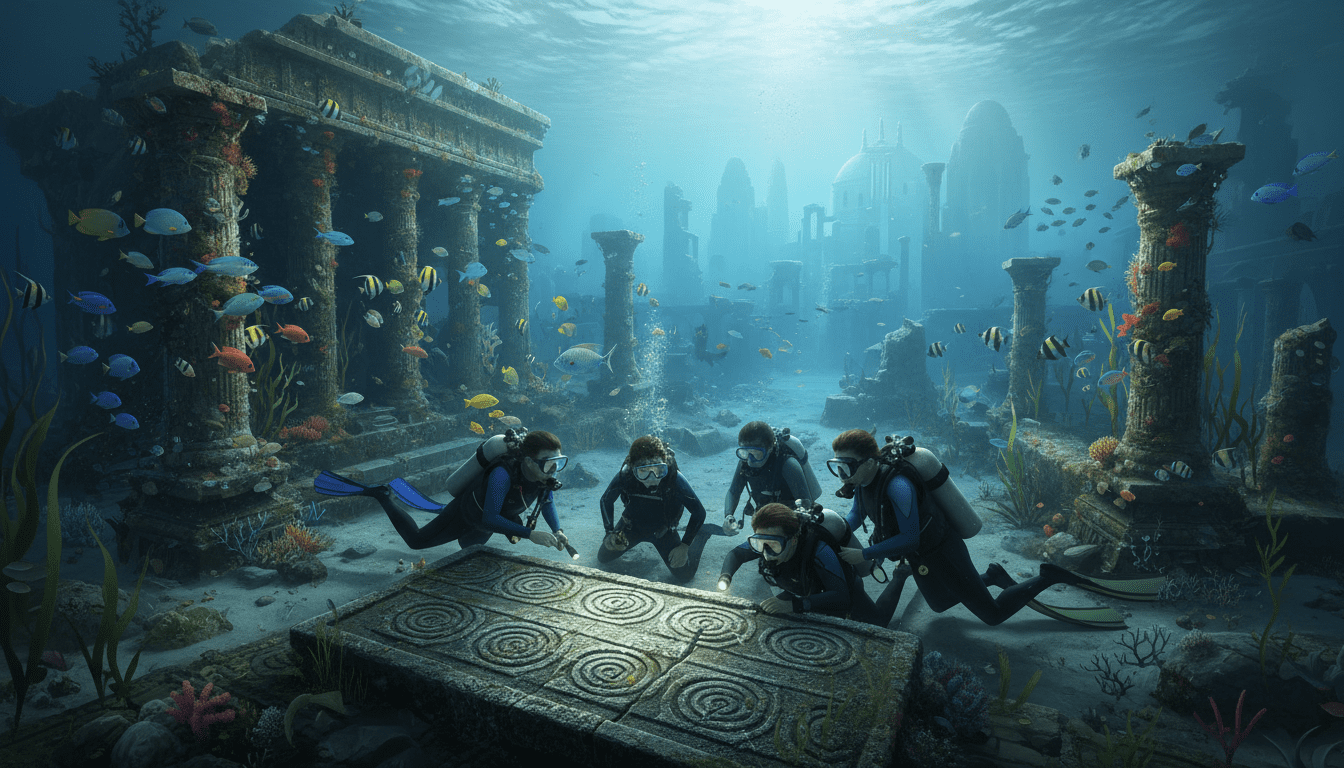
The question of whether the lost city of Atlantis was real has captivated people for over 2,000 years. Spanish scientists from CSIC recently made an exciting discovery that reignites this ancient debate. They found Mount Los Atlantes off the Canary Islands coast during their summer expedition.
This underwater mountain features three inactive volcanoes stretching 50 kilometers across. The seamount sits 2 kilometers beneath the ocean surface. Scientists believe it was once part of an island chain east of Lanzarote during the Eocene era, which lasted from 56 to 34 million years ago.
The research team worked aboard the oceanographic vessel Sarmiento de Gamboa from June 27 to August 6, 2024. They used remote-operated vehicles equipped with 5K ultra-resolution cameras to explore depths reaching 2.5 kilometers. Ancient beaches still remain on the submerged landmass, giving us clues about its past.
This discovery raises fresh questions about Plato’s Atlantis and whether any real place inspired his famous story. The lost city of Atlantis continues to spark scientific curiosity and public fascination. Did Atlantis really exist as an actual civilization, or was it purely a creation of ancient philosophy? The search for answers drives both serious researchers and dreamers to explore Earth’s hidden depths.
The Origins of the Atlantis Story in Plato’s Dialogues
The ancient Atlantis myth began in Athens around 360 BCE when the Greek philosopher Plato wrote about a magnificent island empire. His dialogues remain the sole original source for this captivating tale that has fascinated people for over two thousand years. Plato’s Atlantis story appears in two of his works, written near the end of his life.
Timaeus and Critias: The Only Primary Sources
Everything we know about the underwater civilization comes from Plato’s dialogues Timaeus and Critias. In Timaeus, Plato introduces the story through the character Critias, who claims his grandfather heard it from the Athenian lawgiver Solon. Solon supposedly learned about Atlantis from Egyptian priests during his travels to Egypt.
The Critias dialogue provides more detailed descriptions but remains unfinished. No other ancient writer before Plato ever mentioned this lost empire, making his account the foundation of all later Atlantis stories.
Plato’s Description of the Lost Island Empire
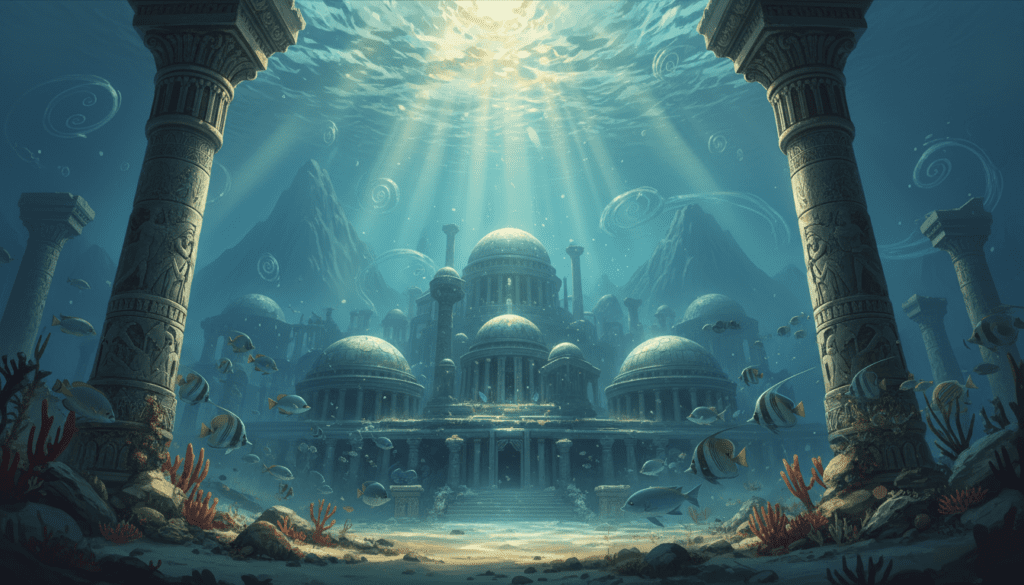
According to Plato, this underwater civilization existed 9,000 years before his time, beyond the Pillars of Hercules (modern Strait of Gibraltar). He described a powerful naval empire ruling over parts of Europe and Africa. The island featured circular rings of water and land, golden statues, and advanced engineering. The entire civilization supposedly vanished in a single day and night of earthquakes and floods.
The Allegorical Purpose Behind Plato’s Tale
Many scholars believe Plato created the ancient Atlantis myth as a philosophical teaching tool. The story illustrates how pride and corruption can destroy even the mightiest nations. Plato used this cautionary tale to warn Athens about the dangers of naval imperialism and moral decay.
Did Atlantis Really Exist According to Ancient Scholars
Ancient scholars held divided opinions about the myth or reality of Atlantis after Plato first introduced the tale. Their debates provide valuable atlantis historical evidence about how the story was understood in antiquity. Some viewed it as pure fiction, while others searched for kernels of truth in the narrative.
Aristotle’s Skepticism of His Teacher’s Story
Aristotle, Plato’s most famous student, expressed doubt about Atlantis. He reportedly stated that “the man who dreamed it up made it vanish” – suggesting Plato invented the story for philosophical purposes. This early skepticism from someone who knew Plato personally carries significant weight when evaluating atlantis historical evidence.
📚 Want to See How the Myth Was Created?

Charles Berlitz's 1974 bestseller is a masterclass in persuasive storytelling—even when the facts don't quite add up. While we now know the scientific truth, his book remains a fascinating study in how compelling narratives shape public perception.
Perfect for: Psychology students, writers, skeptics, and anyone interested in critical thinking and media literacy.
📖 Get on AmazonReading Berlitz's book after learning the real science makes it even more fascinating. You'll spot exactly where drama replaced data.

Crantor and the Egyptian Connection
Crantor, writing around 300 BCE, took a different approach. He claimed Egyptian priests confirmed the Atlantis story, saying records existed in temple inscriptions. This supposed Egyptian verification became important for later scientific research atlantis efforts, though no such inscriptions have ever been discovered.
Early Christian Writers and Their Mixed Views
Christian scholars showed varied responses to the Atlantis tale:
- Some embraced it as historical fact supporting Biblical flood narratives
- Others dismissed it as pagan mythology incompatible with scripture
- A few reinterpreted it as an allegory about divine judgment
These ancient perspectives shaped centuries of debate about the myth or reality of Atlantis, influencing how later generations approached the mystery.
Plato’s Atlantis: Geographic Descriptions and Timeline
Plato painted a vivid picture of the sunken continent Atlantis in his dialogues, placing it beyond the Pillars of Hercules (modern-day Strait of Gibraltar). According to his account, this massive island was larger than Libya and Asia combined, existing approximately 9,000 years before his time. The precise geographic details Plato provided continue to fuel the historical Atlantis debate among scholars and enthusiasts alike.
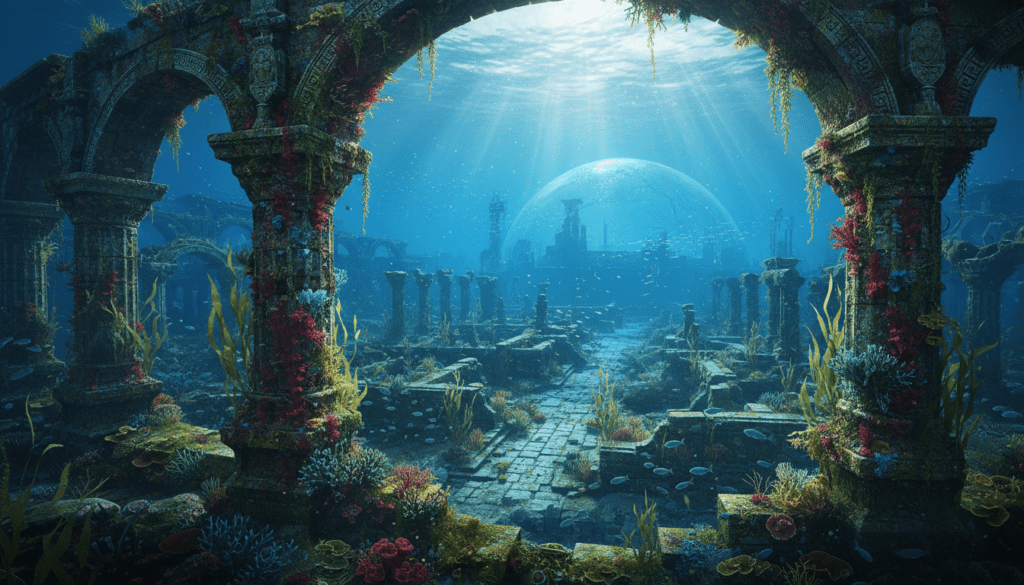
The island empire supposedly featured concentric rings of water and land, with a central palace surrounded by alternating zones of sea and earth. Plato described three circular moats protecting the inner city, connected by tunnels large enough for ships to pass through. These architectural marvels have inspired countless archaeological findings Atlantis expeditions, though none have discovered matching structures.
Recent underwater explorations have revealed intriguing geological formations that spark curiosity. Mount Los Atlantes, a seamount in the Atlantic, displays features suggesting it once supported a thriving ecosystem above water. Scientists have discovered ancient coral gardens, sponge colonies, and areas covered with bacterial mats at various depths. These unexplained historical phenomena show volcanic activity might be more recent than previously believed.
The timeline Plato presented places Atlantis’s destruction around 9,600 BCE, during the end of the last Ice Age. This period witnessed significant geological changes, including rising sea levels and volcanic eruptions. While these natural events align with Plato’s catastrophic flood narrative, no concrete evidence supports the existence of such an advanced civilization during that era.
Archaeological Findings and Scientific Research on Atlantis
Scientists have spent decades searching for physical proof of Atlantis. The quest for evidence for Atlantis has led researchers to examine ancient civilizations and natural disasters that might match Plato’s descriptions. Archaeological teams have explored numerous sites, yet the atlantean civilization reality remains elusive to mainstream science.
The Minoan Civilization and Santorini Connection
The Minoan civilization thrived on Crete and Santorini between 2500 and 1600 BCE. This advanced Bronze Age culture built magnificent palaces and developed Linear A, one of Europe’s earliest writing systems. Around 1600 BCE, a catastrophic volcanic eruption on Santorini buried entire cities under ash and rock. The blast sent tsunamis racing across the Mediterranean Sea.
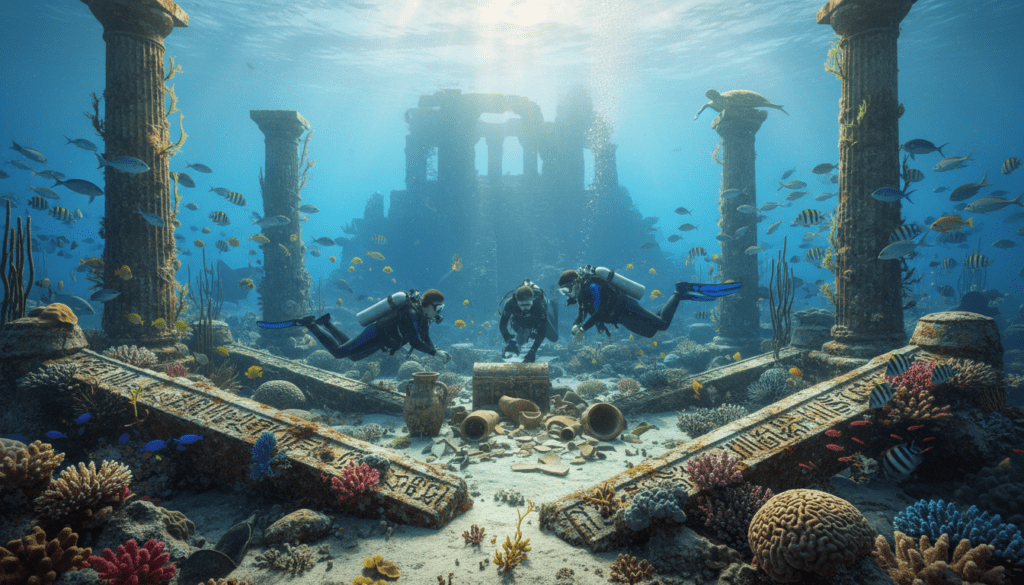
Many researchers point to this disaster as possible inspiration for Plato’s tale. The timing and destruction seem to fit parts of the Atlantis story. Still, key details don’t match—Santorini sits in the wrong ocean and the dates are off by thousands of years.
Robert Ballard’s Perspective on Underwater Exploration
Robert Ballard, who discovered the Titanic, has extensively studied underwater ruins discovery possibilities. He believes the Mediterranean holds many submerged ancient sites but doubts any represent Atlantis. His underwater explorations have found numerous shipwrecks and settlements, yet nothing matching Plato’s grand empire.
Why Scientists Reject the Historical Reality of Atlantis
Most archaeologists and historians view the atlantean civilization reality as fiction. No credible artifacts, structures, or written records exist outside Plato’s dialogues. The geological timeline doesn’t support a massive island sinking 9,000 years before Plato’s time. Scientists classify Atlantis as philosophical storytelling rather than historical fact.
Popular Theories About the Lost City of Atlantis Location
For centuries, explorers and researchers have proposed various atlantis location theories that span the globe. Each theory attempts to match Plato’s descriptions with real geographical features and historical events. These sunken civilization theories range from scientifically plausible to wildly speculative, yet they all share the common goal of solving one of history’s greatest mysteries.
Mediterranean Sea Theories and the Pillars of Hercules
The Mediterranean region remains the most popular search area for Atlantis. Plato specifically mentioned the island lay beyond the Pillars of Hercules, known today as the Strait of Gibraltar. Some researchers believe the Minoan civilization on Crete fits the description, while others point to Sardinia or Malta. The search for archaeological evidence of atlantis in these waters continues to attract serious expeditions and amateur enthusiasts alike.
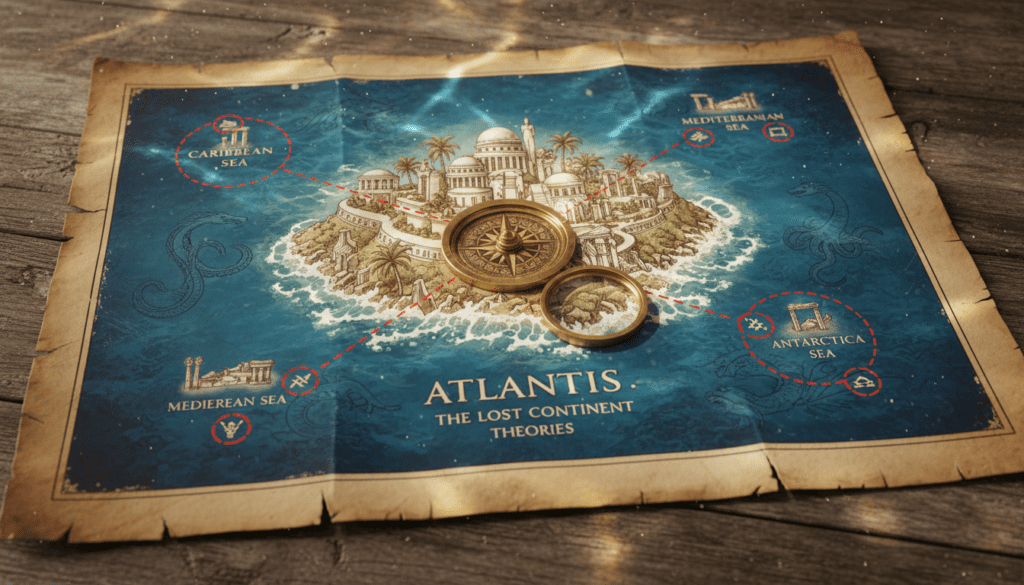
Antarctica and Charles Hapgood’s Shifting Crust Theory
In 1958, Charles Hapgood proposed a radical idea that caught Albert Einstein’s attention. His theory suggested Antarctica was once a temperate continent located much farther north about 12,000 years ago. According to Hapgood, a dramatic shift in Earth’s crust buried this advanced civilization under miles of ice. This theory connects to various unexplained historical phenomena and continues to inspire alternative historians today.
The Black Sea Flood Hypothesis
Around 5600 B.C., the Mediterranean Sea may have burst through the Bosporus strait, flooding what was then a freshwater lake. This catastrophic event could have submerged coastal settlements under hundreds of feet of water in less than a year. Survivors fleeing this disaster might have spread flood stories that eventually inspired Plato’s tale of Atlantis.
The Atlantean Civilization According to Ancient Texts
While Plato’s writings remain the foundation of Atlantean civilization stories, the 20th century saw unusual interpretations that mixed mysticism with dangerous political ideologies. These modern claims about the ancient lost civilization took dramatic turns that went far beyond philosophical debates.
Edgar Cayce, an American psychic active in the mid-1900s, claimed he could access memories of past lives in Atlantis through deep trances. His readings described an Atlantean civilization powered by mysterious crystals and advanced technology that surpassed even modern science. Cayce spoke of flying machines, death rays, and energy crystals that could heal or destroy. His followers documented thousands of these readings, creating a new mythology around lost continent research that attracted believers worldwide.
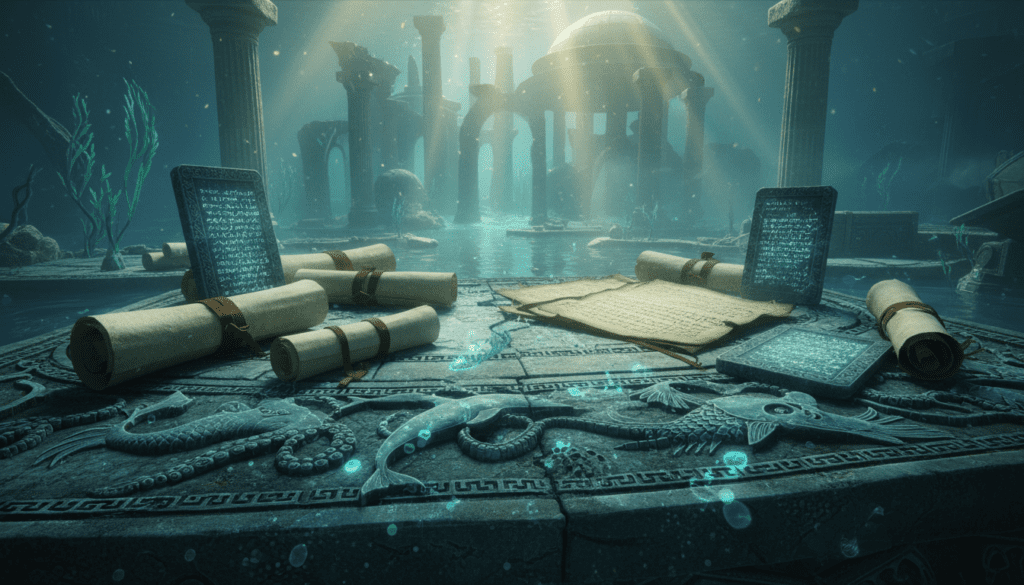
The darkest chapter in lost continent research came when Nazi Germany adopted Atlantis theories for propaganda purposes. Heinrich Himmler’s SS organization funded the Ahnenerbe institute, led by Herman Wirth, to prove Germanic racial superiority through supposed connections to this ancient lost civilization. They promoted the idea that Atlantis was a Nordic empire in the North Atlantic, home to a master race of Aryan ancestors.
These Nazi researchers twisted archaeological findings and ancient texts to support their racist ideology. They sent expeditions to Tibet, Iceland, and South America searching for proof of Atlantean civilization connections to Germanic peoples. This pseudoscientific approach damaged legitimate archaeological research for decades and showed how myths about lost continents could be weaponized for political purposes.
Modern Interpretations and the Enduring Myth of Atlantis
The story of Atlantis has transformed dramatically since Plato first wrote about it. Today’s interpretations blend ancient atlantis myths and legends with modern scientific discoveries, creating a rich tapestry of speculation that continues to fascinate millions worldwide.
From Renaissance Utopias to New World Connections
During the Renaissance, scholars reimagined Atlantis as the perfect society. Sir Francis Bacon’s New Atlantis (1626) portrayed an ideal civilization based on science and reason. When European explorers reached the Americas, many believed they had found Plato’s lost continent. The Maya pyramids and Aztec cities seemed to match descriptions of advanced sunken city theories.
Pseudoscience and Pop Culture’s Fascination
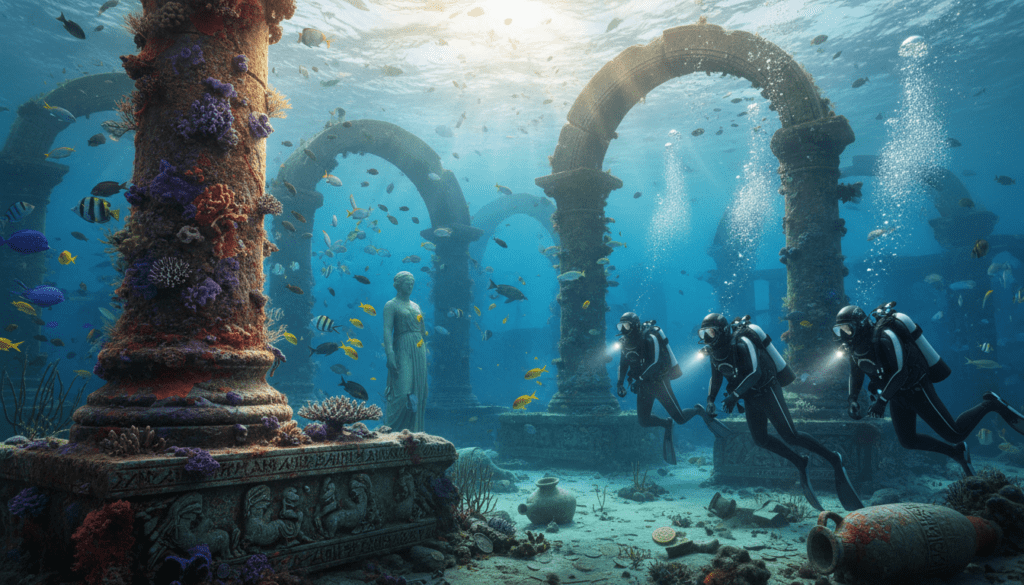
Television shows, movies, and books keep reinventing Atlantis for new audiences. Disney’s animated film brought the legend to children, while documentaries explore underwater ruins using cutting-edge technology. The CSIC research team recently used remotely operated vehicles equipped with gas sensors to study volcanic formations. Their discovery of Mount Los Atlantes near the Canary Islands sparked fresh debates about possible unexplained historical phenomena linked to the original story.
Why the Atlantis Story Captures Our Imagination
People love mysteries, especially ones about lost civilizations. The idea of an advanced society disappearing beneath the waves speaks to our fears and curiosities. Each generation reinterprets these atlantis myths and legends through their own lens, whether searching for underwater ruins with submarines or using satellite imagery to scan the ocean floor.
Historical Evidence vs. Philosophical Allegory
The debate over atlantis historical evidence reveals a stark divide between what science tells us and what philosophy teaches us. When examining the myth or reality of Atlantis, scholars find themselves weighing physical proof against symbolic meaning. Plato’s original account presents Atlantis as a wealthy naval civilization that fell to divine, yet no archaeological discovery has ever confirmed its existence.
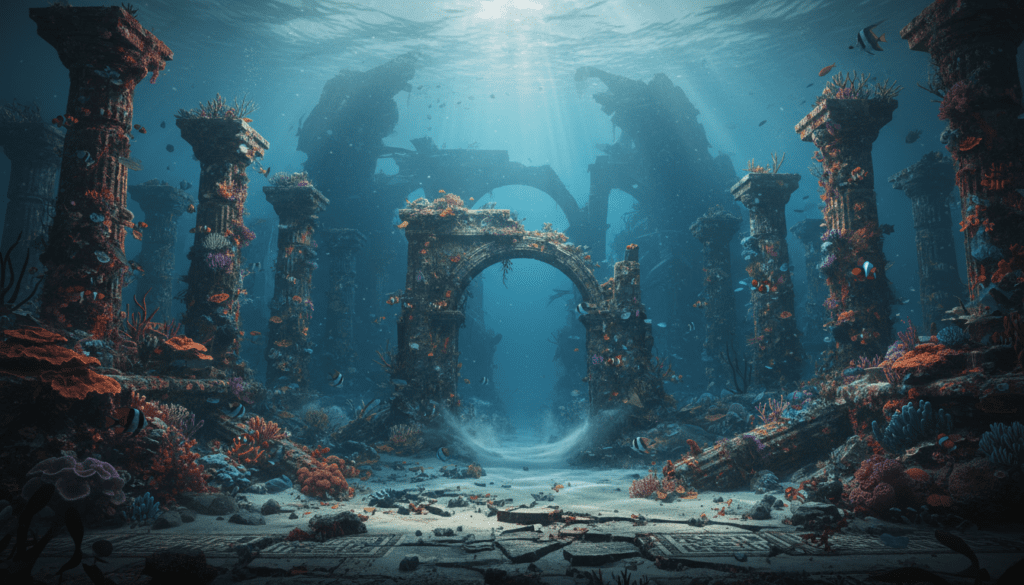
Scientific research Atlantis theories have evolved significantly over time. Charles Hapgood’s shifting crust hypothesis emerged in the 1950s, before scientists understood plate tectonics. His idea suggested entire continents could rapidly shift position, potentially explaining how Atlantis might have vanished. This theory now sits at the margins of geological science, rejected by mainstream researchers who point to the slow, predictable movement of tectonic plates.
Recent investigations of underwater formations like Mount Los Atlantes near the Canary Islands demonstrate how scientific research Atlantis seekers approach potential sites. While these studies haven’t proven any connection to Plato’s story, they provide valuable data about regional geology and volcanic activity patterns. The findings help scientists understand ancient sea level changes and underwater mountain formation.
The paradox of searching for something that may never have existed mirrors philosophical questions about identity and truth. Most scholars today view Atlantis as Plato’s philosophical device rather than historical fact, designed to illustrate ideas about ideal societies, moral corruption, and divine justice.
Conclusion
The question “did Atlantis really exist” has captivated humans for over two thousand years. Plato’s tale of the lost city of Atlantis sparked countless expeditions and theories. Yet most scholars agree that Plato created this story as a philosophical lesson about pride and power, not as historical fact. The detailed descriptions of this underwater civilization serve as a warning about what happens when societies become too ambitious.
Modern science continues to search for answers beneath the waves. Geologist Luis Somoza leads research at Mount Los Atlantes, where underwater formations show traces of ancient beaches. These findings match some descriptions of the lost city of Atlantis as an island that disappeared beneath the sea. While these discoveries help us understand Earth’s geological past and volcanic activity, they don’t prove Plato’s story was real.
The enduring appeal of this underwater civilization reveals something important about human nature. We love mysteries and want to believe in lost worlds waiting to be discovered. Whether the lost city of Atlantis existed as Plato described doesn’t matter as much as what the story teaches us. The tale reminds us that even the mightiest empires can fall, and that wisdom matters more than wealth or military power.
So did Atlantis really exist? The evidence points to no. But the legend lives on in our collective imagination, inspiring exploration and reminding us of timeless truths about human ambition and the rise and fall of civilizations.