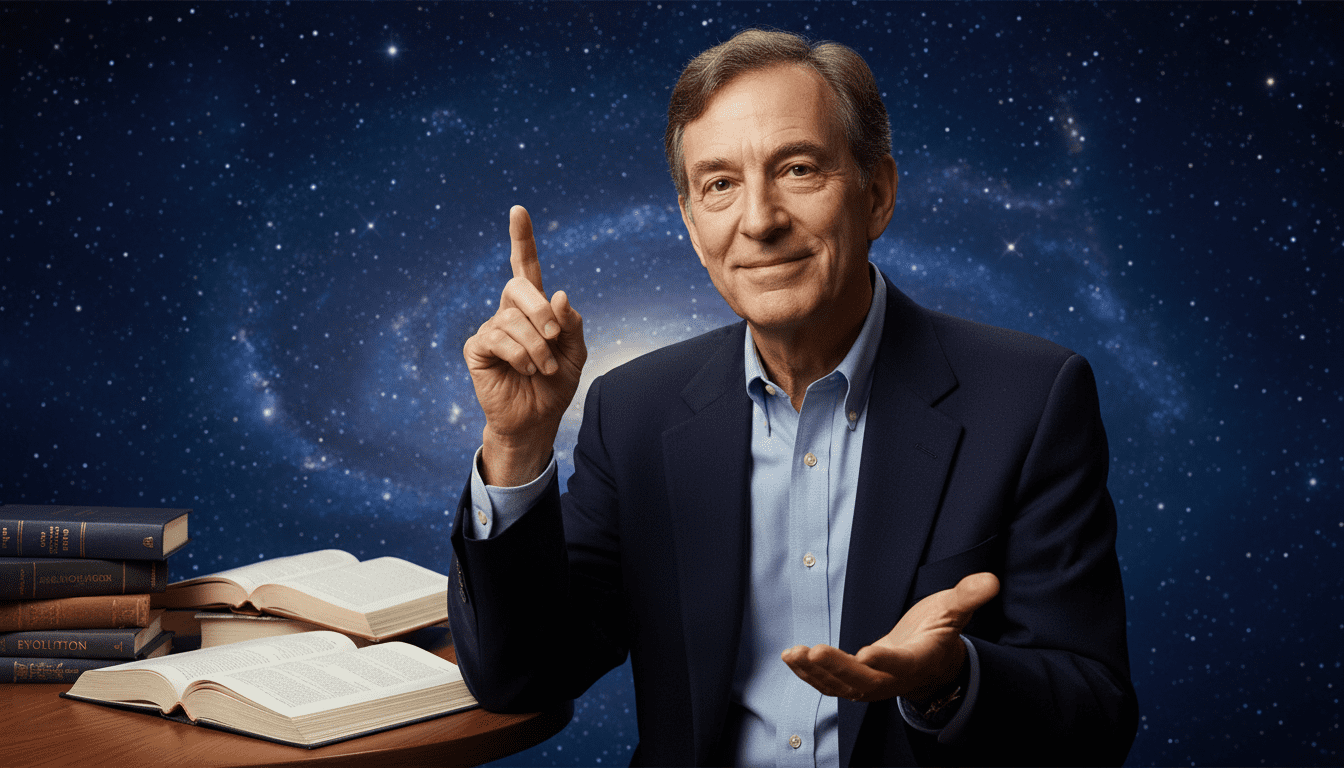
Carl Sagan transformed the way millions of people understood the universe. Born on November 9, 1934, in New York City, this remarkable astronomer Carl Sagan spent his life bridging the gap between complex scientific research and public understanding. His journey from a curious Brooklyn child to one of the most celebrated science communicators of the 20th century changed how we think about our place in the cosmos.

As an astrophysicist and planetary science expert, Carl Sagan published more than 600 scientific papers during his career. He wrote or edited over 20 books that brought space exploration into living rooms across America. His groundbreaking research explored the possibility of life beyond Earth. He even demonstrated how amino acids could form from basic chemicals in laboratory conditions.
The astronomer became a household name through his television series and books about the cosmos. He assembled the Pioneer plaque and Voyager Golden Record, creating messages from Earth to any intelligent life that might find them in space. These golden records contained sounds and images representing life on our planet.
Carl Sagan passed away on December 20, 1996, in Seattle, Washington, at age 62. His vast collection of work lives on at the Library of Congress, where 595,000 items from his career help future generations understand his contributions to planetary science. His legacy as a science communicator continues to inspire students and researchers around the world.
Early Life and Educational Journey of Carl Sagan
The story of the future astronomy scientist began in Brooklyn’s Bensonhurst neighborhood in 1934. Carl Edward Sagan was born to Rachel Molly Gruber and Samuel Sagan, a Ukrainian immigrant who worked in New York’s garment industry. His parents shaped his character in profound ways—his mother’s analytical mind and his father’s sense of wonder about the world created the perfect foundation for a future astronomy popularizer.
Brooklyn Beginnings and Family Influence
Growing up in a Reform Jewish household, young Carl discovered his passion for science early. At age five, he obtained his first library card and made a startling discovery: the Sun was actually a star. This revelation sparked questions that would drive his entire career. His family encouraged his curiosity, though they couldn’t have imagined their son would later write influential carl sagan books that would inspire millions.

The 1939 World’s Fair: A Defining Moment
At just four years old, Carl visited the 1939 World’s Fair in Flushing Meadows. The “America of Tomorrow” exhibit showcased television technology and buried a time capsule for future generations. This experience planted seeds of scientific skepticism and wonder that would flourish throughout his life.
From Rahway High School to the University of Chicago
After moving to Rahway, New Jersey, in 1948, Carl excelled academically. He served as chemistry club president and graduated as a straight-A student in 1951. At sixteen, he enrolled at the University of Chicago, earning multiple degrees including his Ph.D. in astronomy and astrophysics in 1960. His doctoral work under Gerard Kuiper laid the groundwork for his future position at Cornell University.
Academic Career and Scientific Research
Carl Sagan’s academic journey took unexpected turns before he established himself as a renowned scientist. His career path from Harvard to becoming a celebrated Cornell University professor shaped modern planetary science and inspired countless researchers.
Harvard Years and the Denied Tenure
Starting in 1963, Sagan served as a lecturer at Harvard University while working at the Smithsonian Astrophysical Observatory. By 1968, he had risen to assistant professor, contributing groundbreaking research on Venus’s atmosphere. Despite his scientific achievements, Harvard denied him tenure that year. Harold Urey, a Nobel Prize-winning chemist, wrote a letter opposing Sagan’s tenure application. This rejection became a turning point in his career.

Finding His Academic Home
Thomas Gold recognized Sagan’s potential and recruited him to Cornell in 1968. Within two years, Sagan became a full professor, beginning nearly three decades of groundbreaking work in planetary exploration. In 1976, he received the prestigious title of David Duncan Professor of Astronomy and Space Sciences, which he held until his death.
Laboratory for Planetary Studies Leadership
As director of Cornell’s Laboratory for Planetary Studies, the Cornell University astrophysicist mentored future scientific leaders. His notable students included:
- Steven Squyres, who led Mars rover missions
- Christopher Chyba, who advanced astrobiology research
- Clark Chapman, asteroid impact specialist
Sagan edited the journal Icarus throughout the 1970s and 1980s, shaping discourse on SETI and space science. His laboratory became a hub for innovative research in astronomy and the search for extraterrestrial life.
Pioneering Work in Planetary Science
Carl Sagan transformed our understanding of planets through groundbreaking astronomical research that began during his graduate studies. His first major contribution to planetary science came when he calculated a greenhouse model for Venus’s atmosphere. This work revealed how carbon dioxide and water vapor created surface temperatures reaching hundreds of degrees Fahrenheit.

Working alongside James Pollack in the 1960s, the renowned sagan astrophysicist refined Venus atmospheric models that explained the planet’s extreme heat through massive greenhouse effects. His Mars studies proved equally revolutionary. Sagan proposed that seasonal changes on the Red Planet resulted from wind-blown dust storms—a theory later confirmed by Mariner 9 and Viking spacecraft missions.

Cosmos
by Carl Sagan
If this article expanded your mind, Cosmos will transform it. Carl Sagan's masterpiece takes you on an unforgettable journey through 13.8 billion years of cosmic evolution—from the Big Bang to the emergence of consciousness.
Written with Sagan's signature blend of scientific rigor and poetic wonder, Cosmos answers the same questions you just explored—but with the depth and storytelling that made it a global phenomenon.
His astronomical research extended to the outer planets. Jupiter’s atmospheric organic chemistry fascinated him, while his work on Titan’s reddish haze suggested complex organic molecules in its atmosphere. These discoveries laid foundations for understanding that would later captivate millions through the cosmos tv series.
Collaboration defined Sagan’s approach to planetary science. His partnership with Bishun Khare established the importance of organic chemical reactions in the outer solar system. Published papers typically featured students as lead authors, demonstrating his commitment to nurturing new talent. This collaborative spirit helped establish Cornell’s Laboratory for Planetary Studies as a premier research institution where future scientists could explore questions about our solar system’s mysteries.
The Cosmos Series and Television Legacy
In 1980, Carl Sagan transformed science education forever with the groundbreaking cosmos television series. This thirteen-part journey through space and time became a cultural phenomenon that redefined how millions understood their place in the universe. The cosmos tv show blended stunning visuals with Sagan’s poetic narration, making complex scientific concepts accessible to viewers of all backgrounds.
Creating Cosmos: A Personal Voyage
Sagan co-wrote and narrated Cosmos: A Personal Voyage with a clear mission: bring the wonders of the universe into living rooms across America. The series combined cutting-edge special effects with Sagan’s gift for storytelling. Each episode took viewers on an epic journey from the Big Bang to the search for life beyond Earth.

The production team spent three years crafting the cosmos television series. They filmed in twelve countries and used innovative techniques to visualize astronomical phenomena. Sagan’s personal touch made viewers feel like they were traveling alongside a knowledgeable friend rather than attending a lecture.
Impact on Public Television and Global Audiences
The cosmos tv show shattered viewership records for public television. More than 500 million people in sixty countries watched Sagan explore the universe. The series earned two Emmy Awards, a Peabody Award, and a Hugo Award. Its companion book topped bestseller lists for months.
The cosmos television series inspired countless future scientists and sparked renewed interest in space exploration. Young viewers who watched Sagan discuss planetary formation and stellar evolution later pursued careers in astronomy and physics. The show’s success proved that audiences craved intelligent programming about science and our cosmic origins.
NASA Contributions and Space Program Involvement
Carl Sagan’s relationship with NASA began in the 1950s and shaped America’s space exploration for decades. His unique ability to combine scientific rigor with imaginative thinking made him an invaluable advisor. While his work on the search for extraterrestrial intelligence captured public imagination, his practical contributions to space missions proved equally significant.
Apollo Mission Briefings and Consultation
Before astronauts journeyed to the Moon, Sagan briefed Apollo crews on what they might encounter. His skeptical thinking helped NASA prepare for various scenarios on the lunar surface. In 1958, he worked on the classified Project A119, a secret Air Force plan that considered detonating a nuclear device on the Moon. This experience gave him Top Secret clearance and deep insight into space program priorities.

Mariner, Viking, and Voyager Expeditions
Sagan played key roles in designing missions that transformed our understanding of the solar system:
- Mariner 2 – First successful mission to Venus
- Mariner 9 – First spacecraft to orbit Mars
- Viking 1 and 2 – Landed on Mars and searched for life
- Voyager 1 and 2 – Explored outer planets
- Galileo – Studied Jupiter and its moons
These missions reflected his dedication to the SETI program philosophy: exploring our cosmic neighborhood while considering possibilities for life elsewhere. His involvement with the Planetary Society later built upon these NASA experiences.
NASA Distinguished Public Service Medal
NASA awarded Sagan its Distinguished Public Service Medal in 1977, recognizing his exceptional contributions to space exploration. He served on numerous advisory panels for NASA and the National Research Council, bringing skeptical thinking to mission planning while maintaining enthusiasm for discovery.
Pioneer Plaque and Voyager Golden Record
Carl Sagan played a crucial role in creating humanity’s first messages to the stars. In 1972 and 1973, the Pioneer 10 and Pioneer 11 spacecraft carried gold-plated plaques into space, designed by Sagan and his team. These plaques showed basic information about humans and Earth’s location in the universe.
The Pulitzer Prize winner didn’t stop there. For the Voyager missions launched in 1977, Sagan led a committee that created something even more ambitious: the Voyager Golden Records. These gold-plated copper disks contained sounds and images representing life on Earth, from whale songs to Bach’s music.

The idea came from Sagan’s childhood memory of the 1939 World’s Fair time capsule. He wanted to send Earth’s story to potential civilizations among the billions and billions of stars in our galaxy. The records included greetings in 55 languages, 115 images, and 90 minutes of music from different cultures.
Working with the astronomical society community, Sagan ensured these messages would last millions of years in space. The records came with instructions showing aliens how to play them. As the contact author later wrote, these cosmic messages represented humanity’s hope of connecting with other intelligent life.
Today, both Voyager spacecraft continue traveling through interstellar space, carrying Sagan’s golden time capsules beyond our solar system. They remain humanity’s most distant ambassadors, potentially surviving longer than Earth itself.
The Pale Blue Dot Philosophy
Carl Sagan’s most profound gift to humanity came from a single photograph taken by Voyager 1 in 1990. From nearly four billion miles away, Earth appeared as nothing more than a pale blue dot suspended in a sunbeam. This image became the foundation for one of the most powerful philosophical messages from the renowned science popularizer.
Earth from Voyager’s Perspective
When Voyager 1 turned its camera back toward Earth, the resulting image shocked viewers with its stark simplicity. Our planet, home to every person who ever lived, appeared as a tiny speck against the vast darkness of space. The pale blue dot photograph revealed Earth’s true scale in the universe. We live on something vanishingly small compared to solar systems and galaxies.

Environmental and Humanitarian Messages
This cosmic perspective transformed how people think about our planet. The image reinforced the concept of “Spaceship Earth” – the idea that humanity shares one fragile vessel traveling through space. As a skepticism advocate, Sagan used this perspective to argue for environmental protection and global cooperation. The photograph pierced through denial about our circumstances, showing that national borders and conflicts seem absurd when viewed from such distances.
Legacy of Cosmic Perspective
The pale blue dot philosophy continues influencing how we understand our place in the universe. Small acts of kindness matter despite our cosmic insignificance. Teaching a child, helping a friend, or protecting our environment creates meaning at human scales. This perspective from the cosmos series creator reminds us that Earth remains our only home in an indifferent universe.
Science Communicator Extraordinaire
Carl Sagan transformed science communication through his natural ability to explain complex ideas in simple terms. As an astronomy popularizer, he reached millions of Americans through television appearances, magazine articles, and public lectures. His gift for teaching made even the most challenging astronomical concepts feel accessible to everyday people.
The Tonight Show Appearances
Between November 1973 and 1986, the renowned science communicator appeared on The Tonight Show Starring Johnny Carson an impressive 26 times. Carl Sagan called this platform “the biggest classroom in history,” reaching viewers who might never pick up a science textbook. His charismatic personality and enthusiasm for astronomy made him a favorite guest, sparking countless dinner table discussions about space exploration.

Parade Magazine Essays
Writing for publications like Parade Magazine and TV Guide gave the astronomy popularizer access to America’s largest readership. His 1973 book The Cosmic Connection earned praise from The Washington Post, which called it “very nearly perfect.” Time magazine featured Carl Sagan on their January 1974 cover, naming him the “prime advocate and perennial gadfly for planetary exploration.”
Making Science Accessible to Everyone
The future author of the Contact movie source novel believed no question was too simple. Students and readers appreciated that this science communicator never made them feel foolish for asking basic questions. He dictated many of his books while traveling, using the same material for lectures, articles, and chapters. This approach helped him reach diverse audiences through multiple channels.
Literary Achievements and Pulitzer Prize Winner
Carl Sagan’s literary career transformed him from scientist to bestselling author. His written works reached millions of readers worldwide, making complex scientific ideas accessible to everyday people. Through more than 20 books, Sagan created a unique voice in science writing that continues to inspire readers today.
His first major success came in 1966 with Intelligent Life in the Universe, co-written with I.S. Shklovskii. The book sold 25,000 hardbound copies and established Sagan as a serious science writer. In 1973, he published The Cosmic Connection, a collection of essays that showcased his ability to blend scientific rigor with poetic imagination.

The breakthrough moment in Carl Sagan books came with The Dragons of Eden in 1978. This exploration of human intelligence evolution earned him the prestigious Pulitzer Prize for General Nonfiction. The award recognized his gift for explaining complex scientific concepts through engaging storytelling.
In 1985, Sagan ventured into fiction with Contact, a novel about humanity’s first encounter with extraterrestrial intelligence. The book became a bestseller and later inspired the 1997 Warner Brothers film. Other notable works include Pale Blue Dot, Broca’s Brain, and The Demon-Haunted World, published in 1996.
Sagan developed a distinctive writing process by dictating all his books. This method created the conversational tone found in famous Sagan quotes throughout his work. His final book, Billions and Billions, was published posthumously, ensuring his literary legacy would continue educating future generations about the wonders of science.
Contact Novel and Film Adaptation
In 1985, astronomer Carl Sagan ventured into science fiction with his groundbreaking Contact novel. This literary work masterfully blended scientific accuracy with imaginative storytelling about humanity’s first encounter with extraterrestrial intelligence. The book reflected Sagan’s deep involvement with the SETI Institute and his lifelong passion for exploring whether we are alone in the universe.
Science Fiction Meets Scientific Reality
The Contact novel tells the story of Dr. Ellie Arroway, a radio astronomer who detects an alien signal containing blueprints for a mysterious machine. Sagan crafted this narrative using real scientific principles from radio astronomy and mathematics. The story explores profound questions about:
- The intersection of science and faith
- Humanity’s readiness for contact with alien civilizations
- The role of technology in human evolution
- International cooperation in the face of extraordinary discovery

Warner Brothers Movie Production
The Contact movie premiered in 1997, bringing Sagan’s vision to the big screen. Warner Brothers produced this adaptation starring Jodie Foster as Dr. Arroway. The film remained faithful to the novel’s core themes while showcasing the work of the SETI Institute in searching for extraterrestrial signals. Director Robert Zemeckis created stunning visual effects that brought the cosmic journey to life.
Astronomer Carl Sagan worked on the screenplay before his death in 1996. The Contact movie earned critical acclaim and two Academy Award nominations, introducing millions to the scientific search for extraterrestrial life.
SETI Program and the Search for Extraterrestrial Life
Carl Sagan transformed the search for extraterrestrial intelligence from science fiction into serious scientific inquiry. His passion for discovering life beyond Earth made SETI a respected field of study. Through rigorous scientific methods and public advocacy, he convinced both scientists and the general public that looking for alien civilizations was worth pursuing.
Exobiology Pioneer
Sagan’s scientific contributions to exobiology began in the 1960s when he demonstrated that amino acids—the building blocks of life—could form from basic chemicals when exposed to light. This groundbreaking experiment showed that life’s ingredients might exist throughout the universe. He was among the first scientists to suggest that Mars could have harbored life in its past, pushing NASA to explore this possibility.

Communication with Extraterrestrial Intelligence
The SETI program gained international attention through Sagan’s efforts. He helped establish microwave searches as the primary method for detecting alien signals. His famous phrase “extraordinary claims require extraordinary evidence” became the guiding principle for evaluating potential discoveries. This scientific standard protected the search for extraterrestrial intelligence from becoming pseudoscience.
Scientific Approach to Life Beyond Earth
Sagan speculated about possible life on various celestial bodies including:
- Mars with its ancient river valleys
- Venus beneath its thick clouds
- Jupiter’s moon Europa with its subsurface ocean
- Saturn’s moon Titan with its organic chemistry
His approach combined imagination with scientific rigor. The dark forest theory represents one modern perspective on why we haven’t found extraterrestrial civilizations yet, building on questions Sagan first raised decades ago.
The Planetary Society Co-Founder
In 1980, Carl Sagan joined forces with Louis Friedman and Bruce Murray to establish The Planetary Society, an organization that would revolutionize public engagement with space science. This nonprofit group emerged from their shared vision of making planetary exploration accessible to everyone, not just scientists and government officials.
The timing was perfect. Fresh from the success of the Cosmos TV series, Carl Sagan understood the public’s hunger for space knowledge. The Planetary Society became the world’s largest space interest group, giving ordinary citizens a voice in humanity’s journey beyond Earth. Members could participate in real missions, fund innovative research, and influence space policy decisions.

- Inspiring people worldwide about the wonders of planetary exploration
- Informing the public about space missions and discoveries
- Involving citizens directly in advocacy for space programs
Through grassroots campaigns and member support, The Planetary Society successfully lobbied Congress to restore funding for critical missions. They championed projects that government agencies considered too risky or expensive. Carl Sagan’s celebrity status helped attract thousands of members who shared his passion for understanding our cosmic neighborhood.
Today, the organization continues its founder’s legacy by supporting innovative space technologies and educating new generations about planetary exploration. From solar sail experiments to searching for Earth-like planets, The Planetary Society remains true to the vision that Carl Sagan helped create four decades ago.
Billions and Billions: Popular Science Writing
Carl Sagan transformed complex scientific ideas into captivating stories that millions could understand. His gift for writing made him one of the most celebrated science authors of the 20th century. Through his Carl Sagan books, he sparked curiosity about the universe in readers worldwide.
The Dragons of Eden Success
In 1978, The Dragons of Eden explored the evolution of human intelligence in a way that fascinated both scientists and everyday readers. This groundbreaking work earned Sagan recognition as a Pulitzer Prize winner, establishing him as a master of popular science writing. The book used childhood memories and personal experiences to explain complex concepts about the human brain.

The Demon-Haunted World: Science as a Candle in the Dark
Published in 1996, this book became Sagan’s passionate defense of rational thinking. He introduced readers to his famous “baloney detector” – a set of tools for identifying false claims. One of his most powerful Sagan quotes from this work states: “Science is not only compatible with spirituality; it is a profound source of spirituality.” The book urged people to embrace scientific skepticism in an age of misinformation.
Posthumous Publications and Continued Influence
The phrase “billions and billions” became forever linked with Sagan’s legacy through his final book of the same title. Published after his death, it continued his mission of making science accessible. His influence extends beyond his Carl Sagan books through hundreds of articles in National Geographic and other publications. As a founding member of CSICOP, he championed scientific investigation of paranormal claims.
Legacy and Lasting Impact on Science Education
Carl Sagan’s influence extends far beyond his lifetime, shaping generations of scientists and space enthusiasts. As a Cornell University professor, he transformed how science reaches the public, leaving an indelible mark on education and scientific discourse. His dedication to teaching and mentoring created ripples that continue spreading through the scientific community today.
Mentoring Future Scientists like Neil deGrasse Tyson
The astronomer touched countless lives through personal mentorship at Cornell. Neil deGrasse Tyson stands as perhaps the most famous example of Sagan’s lasting influence. When Tyson was a teenager considering colleges, the Cornell University professor personally invited him to visit Ithaca, spending an entire day showing him around campus. This gesture of kindness and encouragement helped shape Tyson’s career path as a science popularizer.

Many other students who studied under this remarkable astronomer went on to become leaders in planetary science. His teaching style emphasized critical thinking and wonder, inspiring students to pursue careers in astronomy, physics, and space exploration.
Nuclear Disarmament Activism
Beyond astronomy, Sagan actively worked for global peace. He co-authored the groundbreaking TTAPS paper on nuclear winter, demonstrating how nuclear war could devastate Earth’s climate. His name appeared last among the authors, following scientific tradition for senior contributors. This research influenced international policy discussions about nuclear weapons.
Awards and Recognition
The astronomical society and scientific community honored Sagan with numerous prestigious awards:
- Klumpke-Roberts Award (1974)
- NASA Distinguished Public Service Medal (1977)
- Pulitzer Prize for General Non-Fiction (1978)
- Oersted Medal (1990)
- National Academy of Sciences Public Welfare Medal (1994)
In 2001, NASA Ames Research Center dedicated the Carl Sagan Center for the Study of Life in the Cosmos, honoring the science popularizer on what would have been his 67th birthday.
Conclusion
Carl Sagan stands as one of history’s greatest science communicators. He brought the wonders of space to living rooms across America and beyond. Through Cosmos and his many books, astronomer Carl Sagan made people look up at the stars with new understanding. His gift was turning complex ideas into stories that anyone could grasp and enjoy.
The impact of Carl Sagan reaches far beyond his television series and written works. He shaped how scientists talk to the public today. His students, including Neil deGrasse Tyson, carry on his mission of making science exciting and accessible. From his work with NASA to his role in founding The Planetary Society, Sagan built bridges between researchers and everyday people who wanted to understand the vastness of the cosmos.
Decades after his passing in 1996, Carl Sagan’s vision continues to inspire new generations. His warnings about environmental destruction and nuclear war remain relevant. His search for extraterrestrial life through SETI opened new scientific frontiers. Most importantly, his belief that science belongs to everyone transformed how we teach and learn about our universe. The astronomer Carl Sagan didn’t just study the cosmos—he helped humanity find its place within it.