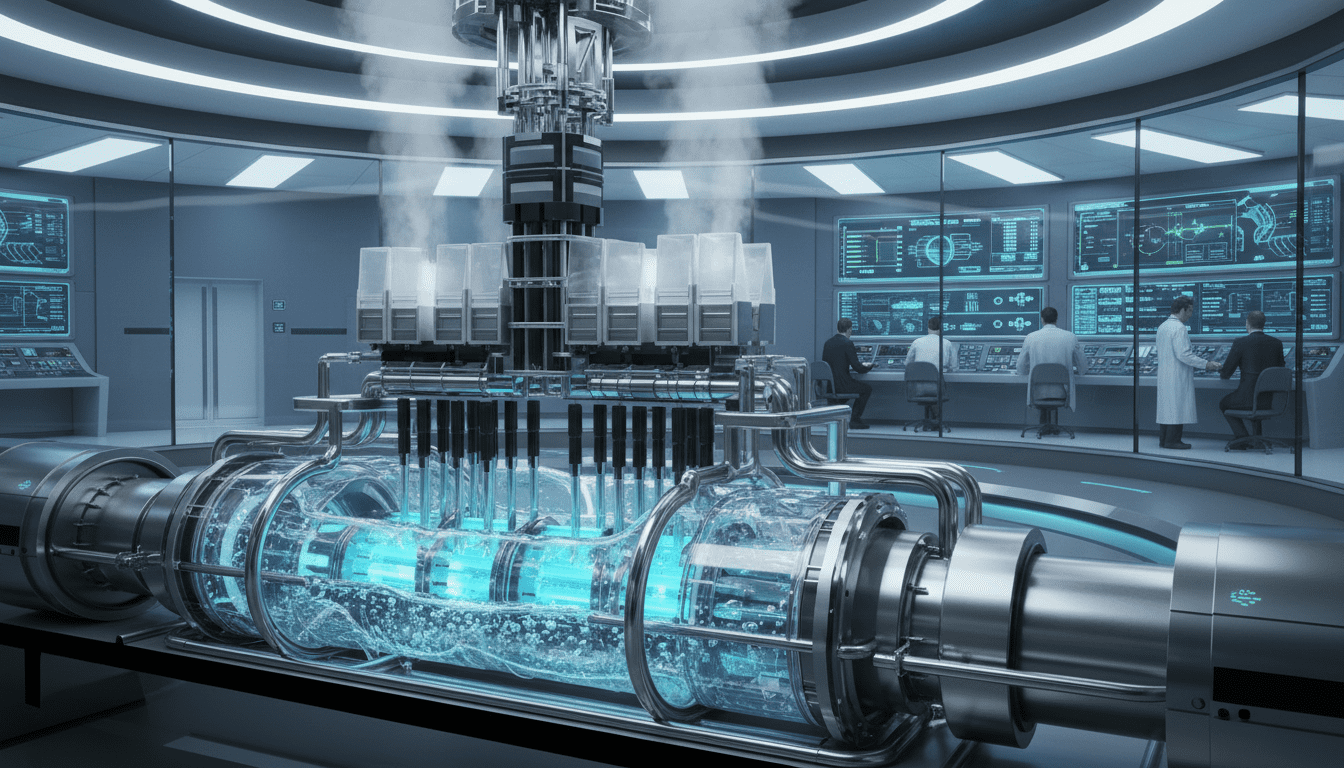
Nuclear reactors are key to clean energy. They control atomic reactions to make lots of electricity. Today, 94 commercial reactors in the United States power millions of homes and businesses.
The science behind nuclear reactors is fascinating. Inside, uranium atoms split in a controlled chain reaction. This process releases a lot of heat. The heat turns water into steam, which powers turbines and generators.

Nuclear power makes up 9% of the world’s electricity. Over 400 reactors operate worldwide, from Arizona to Georgia. These plants are vital for powering our society.
Nuclear energy works with wind and solar to make clean electricity. Together, they provide 30% of the world’s clean energy. Reactors run for 18 to 24 months without needing to be refueled, making them reliable.
Learning about nuclear power shows its importance in fighting climate change. Each reactor saves millions of tons of carbon dioxide from the atmosphere every year. This makes nuclear energy crucial for America’s energy goals.
Understanding Nuclear Fission Process: The Foundation of Reactor Technology
The nuclear fission process powers every reactor today. It releases a lot of energy when atoms split. This energy is what we use to make electricity.
This reaction is key to nuclear power. It makes nuclear power one of the most concentrated energy sources we have.
The Science Behind Splitting Atoms
Nuclear fission is simple. It starts with heavy atoms like uranium-235 or plutonium-239. When a neutron hits these atoms, they split into two smaller atoms.
This splitting releases energy in three ways: kinetic energy from the moving fragments, gamma radiation, and free neutrons. These neutrons fly away fast.
The energy released is huge. One kilogram of uranium-235 can produce about 19 billion kilocalories. To get the same energy from coal, you’d need to burn 2.7 million kilograms.

Chain Reaction Mechanics in Nuclear Reactors
The nuclear chain reaction starts with free neutrons from one split atom hitting nearby atoms. Each fission releases two or three new neutrons.
These neutrons then split more atoms. This creates a self-sustaining process. But, we need to manage it carefully to keep the power steady.
Energy Release from Uranium-235 and Plutonium-239
Uranium-235 and plutonium-239 are the main fuels in reactors. The nuclear fission process releases a lot of energy. It’s three million times more per kilogram than burning coal.
This means a small amount of nuclear fuel can power cities for months.
How Does a Nuclear Reactor Work
Nuclear reactors are complex machines that tap into the power of atoms. They control nuclear fission, where uranium atoms split, releasing a lot of energy. This energy is then turned into electricity to power homes and businesses in America.
Basic Operating Principles
The chain reaction principle is key to nuclear power. When a uranium-235 atom absorbs a neutron, it splits, releasing more neutrons. These neutrons can then hit other uranium atoms, starting the cycle again. Nuclear engineers keep the reaction steady by managing the number of neutrons.
From Fission to Electricity Generation
The process from atom splitting to powering your home is complex:
- Nuclear fission creates intense heat in the reactor core
- Circulating water absorbs this heat, turning into high-pressure steam
- Steam drives massive turbines connected to generators
- Generators produce electricity for the power grid

The Role of Neutron Moderators
Neutron moderation is crucial for controlled fission. Fast neutrons from fission need to be slowed down. Moderator materials like water or graphite do this. They make the neutrons thermal, which are more likely to cause fission. In most American reactors, water cools and moderates the reaction.
Reactor Core Components and Their Functions
The reactor core is the heart of a nuclear reactor. It turns atomic energy into heat we can use. Inside, hundreds of fuel assemblies hold thousands of uranium pellets. These pellets create a lot of energy through controlled reactions.

Many parts work together in the reactor core. Fuel assemblies stand upright, surrounded by water. This water cools and slows down neutrons for better reactions. Control rods move between fuel assemblies, controlling the reaction by absorbing neutrons.
Heat is made in three main ways in the core:
- Kinetic energy from fission turns into heat as particles hit other atoms
- Gamma rays release energy into the core materials
- Fission products decay, adding heat continuously
Reactor cooling systems move water through the core at high pressure. This water carries heat to steam generators. It gets very hot, over 600°F, but stays liquid because of the pressure. The whole thing is in a strong reactor vessel to keep everything safe.
Today’s reactors have many backup systems to control the reaction. Operators can speed up, slow down, or stop the reaction. This is done with different parts working together to keep the power steady.
Uranium Fuel Rods: The Heart of Nuclear Energy Production
Nuclear reactors use a powerful fuel source in tiny packages. Uranium fuel rods are the main energy source in most reactors. They contain enriched uranium, making nuclear energy clean and reliable for millions.
Fuel Pellet Composition and Energy Density
Uranium fuel rods have hundreds of ceramic pellets made from uranium dioxide. These small pellets are made to be just right. A single pellet can produce as much energy as one ton of coal. This makes uranium fuel rods very efficient for energy.

Fuel Assembly Structure and Configuration
Engineers carefully arrange uranium fuel rods into fuel assemblies. Each assembly has over 200 rods in a square or hexagonal pattern. These assemblies go into the reactor core for fission reactions.
The space between rods lets coolant flow. This coolant removes heat from the nuclear reactions.
Comparing Nuclear Fuel to Conventional Energy Sources
The difference in efficiency between nuclear and fossil fuels is huge:
- One uranium pellet equals 1 ton of coal
- A reactor needs 27 tons of uranium yearly
- A coal plant needs 2.5 million tons annually
- Uranium is 120,000 times more energy-dense than coal
This efficiency means less fuel to transport and store. It also reduces environmental harm from mining.
Control Rods Function in Managing Chain Reactions
Nuclear reactors need precise control systems to run safely and efficiently. At the heart of this system are special parts that control how fast nuclear fission happens by catching neutrons. They work like a car’s gas pedal and brakes, letting operators adjust the reaction speed as needed.
Neutron Absorption Materials
The control rods use materials that are great at catching neutrons. Silver, boron, cadmium, and hafnium are key because they catch neutrons without starting more reactions. When control rods are inserted into the reactor, they stop neutrons from splitting uranium atoms. This affects how many fissions happen every second.

Adjusting Reactor Power Output
The control rods let operators adjust the reactor’s power with great precision. By pushing rods deeper, more neutrons are caught, lowering power. Pulling them out lets more neutrons cause fissions, raising power. This change happens quickly, making it the fastest way to adjust power during normal operation.
Emergency Shutdown Systems (SCRAM)
Every reactor has an emergency shutdown system that can stop the reaction fast. This system, called SCRAM, drops all control rods into the core at once using gravity or springs. Some reactors also use liquid boron solutions for extra safety. These systems kick in if sensors spot unsafe conditions like too high temperatures or pressures.
Coolant Systems in Reactors: Managing Extreme Heat
The reactor coolant system is key in nuclear power plants. It removes the intense heat from fission. Without it, reactor temperatures would rise too high, damaging fuel and parts.
Reactor designs use different coolants. Water is the main coolant in most American reactors. Some newer designs use gas, liquid metals, or molten salts. These coolants move through the reactor core, taking heat from the fuel.

The heated coolant then goes to steam generators. There, it transfers its heat to make steam. This heat transfer process happens in a closed loop. It keeps radioactive coolant separate from the steam water.
Coolant systems in reactors do more than just cool:
- They act as neutron moderators in some reactors.
- They influence power output through temperature changes.
- They provide emergency cooling during shutdowns.
- They keep operating temperatures stable for better efficiency.
Temperature changes affect coolant density, which impacts reactor performance. When coolant heats up, it becomes less dense. This density change can adjust the reaction rate in some reactors, acting as a safety feature. The cooling system must control temperatures precisely to ensure stable power and prevent overheating.
Containment Vessel Design for Maximum Safety
The nuclear containment vessel is a huge barrier against radioactive materials. It has many layers to keep radiation inside. This is a key safety feature in nuclear power plants.
Physical Barriers and Protection Layers
A containment vessel has several barriers. The innermost is the reactor pressure vessel, where the fuel and core are. This steel part is very thick and heavy.
- A steel liner to stop radioactive gas leaks
- Reinforced concrete walls, 3 to 6 feet thick
- An outer shield building for extra protection
Pressure Resistance and Structural Integrity
The vessel must handle extreme conditions. It’s built to withstand high pressures and temperatures. It can also resist earthquakes, tornadoes, and plane crashes.
Neutron radiation causes embrittlement in the vessel over time. This can’t be fixed and affects how long the plant can run. Regular checks are done to keep the vessel safe for 40 to 60 years.
Types of Nuclear Reactors in the United States
The United States mainly uses light-water reactors for power. These reactors cool and moderate with ordinary water. This makes them reliable for electricity. The two main types have different features and safety measures.
Pressurized Water Reactors (PWRs)
More than 65% of US reactors are pressurized water reactors. They pump water through the core at high pressure. This keeps the water from boiling, even at high temperatures.
The heated water goes through tubes in steam generators. There, it heats a separate water circuit. This circuit makes steam to power turbines.

The design keeps radioactive materials in the primary loop. This makes PWRs safe for people and the environment.
Boiling Water Reactors (BWRs)
About one-third of US plants are boiling water reactors. They let water boil directly in the reactor. Steam goes straight to the turbines.
After the turbines, the steam turns back into water. It then returns to the reactor core.
Advanced Reactor Designs and Generation IV Technology
New reactor designs aim for better safety and efficiency. The HTR-10 is a step towards Generation IV. These designs use new fuels and better radiation shielding.
They also aim for higher efficiency and less waste. Some can use different fuels or burn more fuel, reducing waste.
Nuclear Power Generation: From Steam to Electricity
The nuclear power generation process turns the heat from atomic fission into electricity. This electricity powers millions of homes. When atoms split in the reactor core, they release a lot of energy. This energy heats the coolant to very high temperatures.
This heat makes steam. The steam then drives massive turbines connected to electrical generators.

In a nuclear plant, the coolant absorbs heat from the fuel rods. It then transfers this heat to a secondary water system. This water boils into high-pressure steam, reaching temperatures over 500°F.
The steam rushes through turbine blades at speeds over 1,800 rpm. This spinning of the generator shaft produces electricity. After going through the turbines, the steam condenses back into water. It then returns to start the cycle again.
Nuclear plants can last a long time. Original designs were for 30 to 40 years, but many now run for 60 years or more. The Turkey Point Nuclear Plant in Florida got approval to run for 80 years in 2019. Regular maintenance and upgrades help them last longer.
Nuclear reactors provide constant electricity, unlike solar or wind power. A single reactor can run for 18 to 24 months without needing to be refueled. This makes nuclear power essential for keeping the electrical grid stable. It delivers clean energy all day, every day, to communities and industries.
Safety Systems and Reactor Control Mechanisms
Nuclear power plants use advanced control systems for safe operation. These systems manage the nuclear fission process with great care. They keep the chain reaction in reactors stable at all times.
Automated and manual controls work together to prevent accidents. They protect plant workers and nearby communities.
Xenon Poisoning and Iodine Pit Management
Fission products build up in the core during normal reactor operation. Xenon-135 is a strong neutron absorber that can stop the chain reaction. When the reactor is shut down, iodine-135 turns into xenon-135 for about 6.5 hours.
This creates an “iodine pit” that makes restarting the reactor hard for one to two days. Plant operators must plan carefully around this issue.
The xenon-135 decays to cesium-135 over about nine hours. This allows the nuclear fission process to start up again normally.

Delayed Neutron Control
Less than one percent of neutrons from fission arrive late. Yet, these delayed neutrons are crucial for reactor control. They appear milliseconds to minutes after the initial split.
This gives operators time to adjust power levels. Without delayed neutrons, controlling the chain reaction would be too fast and unsafe.
Automatic and Manual Safety Interventions
Emergency shutdown systems are ready to insert control rods instantly when needed. These SCRAM systems flood the core with neutron-absorbing materials in seconds. Both automatic sensors and manual controls can start these safety measures.
They stop the nuclear fission process immediately when abnormal conditions arise.
Nuclear Waste Management and Fuel Recycling
Nuclear power plants make very little waste compared to other energy sources. If a nuclear reactor powered your home for a year, it would only produce about 5 grams of high-level radioactive waste. This is as light as a sheet of paper. This small amount makes managing nuclear waste a special challenge.
Spent Fuel Storage Solutions
Used fuel rods are stored in special pools at power plants. These pools use water to cool the fuel and block radiation. Later, the fuel is moved to dry cask storage containers made of steel and concrete.
These big casks can keep radioactive materials safe for decades. Scientists are working on permanent disposal sites. The Nuclear Regulatory Commission checks all storage facilities in the U.S. to make sure they are safe.
Reprocessing and Recycling Technologies
Many countries use fuel recycling technologies to get valuable materials from used fuel. France, Russia, and Japan have facilities that separate uranium and plutonium from waste. This way, they can use these materials again, reducing the need for new uranium.
Recycling can cut the volume of high-level waste by up to 80 percent. For over 40 years, countries have safely recycled fuel. This shows that recycling nuclear waste is good for the economy and the environment.
Conclusion
Learning about nuclear reactors shows us a complex yet simple process. A nuclear reactor is like a huge kettle that heats water through atomic fission. This process splits atoms, releasing heat that turns water into steam.
The steam then powers turbines, which are connected to generators. These generators make electricity for homes and businesses all over the world.
Nuclear energy has come a long way since the first controlled chain reaction in 1942. Today, there are 417 commercial reactors worldwide. They have many safety features, advanced controls, and efficient cooling systems.
Research facilities use 226 more reactors for science. Over 200 ships also use nuclear power. This shows how reliable and versatile nuclear technology is.
Nuclear power now gives 9% of the world’s electricity and doesn’t produce carbon emissions. Modern reactors are safer, more efficient, and better at managing waste than old ones.
As we need more energy and worry about the climate, nuclear tech keeps getting better. Generation IV reactors are on the horizon, promising even more safety and efficiency. Understanding how nuclear reactors work is key to our clean energy future.